Guest Posts, Reviews, עברית

קולו של הבבלי: בכבלי מסורת ותמורה- איתי מרינברג-מיליקובסקי

“קולו של הבבלי: בכבלי מסורת ותמורה” – על ספרו של מולי וידס – איתי מרינברג-מיליקובסקי

Moulie Vidas, Tradition and the Formation of the Talmud, Princeton University Press, Princeton and Oxford, 2014.

מהו ה’בבלי’? שאלה כללית ואמורפית זו, משונה ככל שהיא עשויה אולי להיראות, ניצבת בשנים האחרונות כשאלת-יסוד עקרונית במפעלם של כמה חוקרים. הללו מבקשים לפרוץ בעבודתם את גבולותיו הצרים של בירור קונקרטי, גדוּר-היטב – ויהא זה בירור ספרותי, היסטורי, תרבותי, וכל כיוצא בו – על מנת להתחקות באמצעותו אחר מה שמוצג לעתים ברמז, אם לא במפורש, כ’מפתח’ וכ’סוד’ של הטקסט המכונן. ספרו היפה של מולי וידאס מצטרף למגמה האמורה ותורם לה תרומה חשובה. ‘שאלת הבבלי’ אמנם אינה מוצגת בו במישרין, אולם פרקי הספר מצטרפים יחד לחיפוש מרתק אחר איזו ליבה או מהות פנימית שלו. וידאס אינו מבקש אותה במרחבים רחוקים, בפינה נידחת של מושא המחקר, או בפסקה שולית שרק בגלל חולשתנו לא עמדנו עליה עדיין כראוי, אלא בתופעות מרכזיות, מוכרות היטב לכל המצוי בבבלי. הודות לכך, זווית המבט הרעננה והמסקרנת המוצעת על ידו ניתנת לשימוש חוזר ולבדיקה מתמשכת בידי לומדים וחוקרים.

שני חלקי הספר מטפלים בנושאים ידועים למדי. הראשון, צורני או ‘ספרותי’ במהותו, מוקדש לבעיית היחסים בין רבדיה השונים של הסוגיה התלמודית (פרקים 1-3); השני, תמאטי ו’אידיאולוגי’ במובהק, כרוך בנטיית הבבלי אל החידוש היצירתי (פרקים 4-6). את שניהם מחברת בהצלחה (ואולי, ליתר דיוק, הצלחה יחסית) שאלת הזיקה אל המסורת: עריכת הבבלי במבנה רב-שכבתי מורכב משקפת, לדעת וידאס, עמדה מסוימת באשר לטיבן של מסורות קדומות – והיא היא שמשתקפת גם בהעדפת ‘עוקר ההרים’ על ה’סיני’. תבנית הספר מניחה רמת הלימה גבוהה בין צורה ותוכן, ולכך אשוב בהמשך; בשני המקרים, מכל מקום, מילת המפתח היא ‘אי-המשכיות’ (discontinuity): הבבלי, וּוידאס בעקבותיו, מַבנה, מסמן, מדגיש ואף חוגג את הפער בין מקור לדיון בו, בין ידע לניתוחו, בין ‘מסורת’ ל’מוסרים’; הוא עושה זאת בהצהרות גלויות, הנדונות בחלקו השני של הספר, ובדרכים שקטות יותר, הנדונות בחלקו הראשון.

לא יפלא, אפוא, כי החיבור שלפנינו מנכיח בדרכים שונות את דמות עורכיו של הבבלי, שאת קולם – ‘קולו’ של הבבלי, מכנה אותו המחבר לפעמים– אפשר לאתר בקלות, אם רק מאזינים כראוי:

If we think of the Talmud’s creators mostly as introducing unconscious modifications, as hiding themselves behind their traditions and retrojecting their own words and ideas into them, as adapting tradition to new context and ‘improve’ it, it is because we have focused on these specific activities and not others. The Bavli’s creators themselves are not hiding: they are there in almost every sugya, structuring the discussion and leading the reader (or listener) through the sources, expressing their voice in the anonymous discussion that organizes most of the Talmud. While their choice of anonymity in itself might be seen as an act of deference toward their predecessors, their literary practice betrays a different set of priorities. (p.11)

בהעמידו בסיס קונספטואלי לפרקים הפרשניים שיבואו אחריו, סוקר המבוא לספר גישות מרכזיות בשאלת היחסים בין ‘קולו’ של הבבלי עצמו לקולות המצוטטים בו. גישות אלה נכרכות בידי וידאס בתמורות שחלו בעת החדשה בהמשגת ה’מסורת’, כמו גם בהתפתחויות בחקר התרבויות האוראליות, ובהטמעת השיח על אודות פרקטיקות של ‘מְחבּרוּת’ (authorship. * מונח עברי אלגנטי יותר יתקבל בברכה) – הן כאשר תמורות אלה מוזכרות בכתבי מקצת מן החוקרים ומשמשות להם השראה גלויה, והן, מודה וידאס, כאשר הן בבחינת ‘נוכח-נפקד’ בעבודתם של חוקרים אחרים.
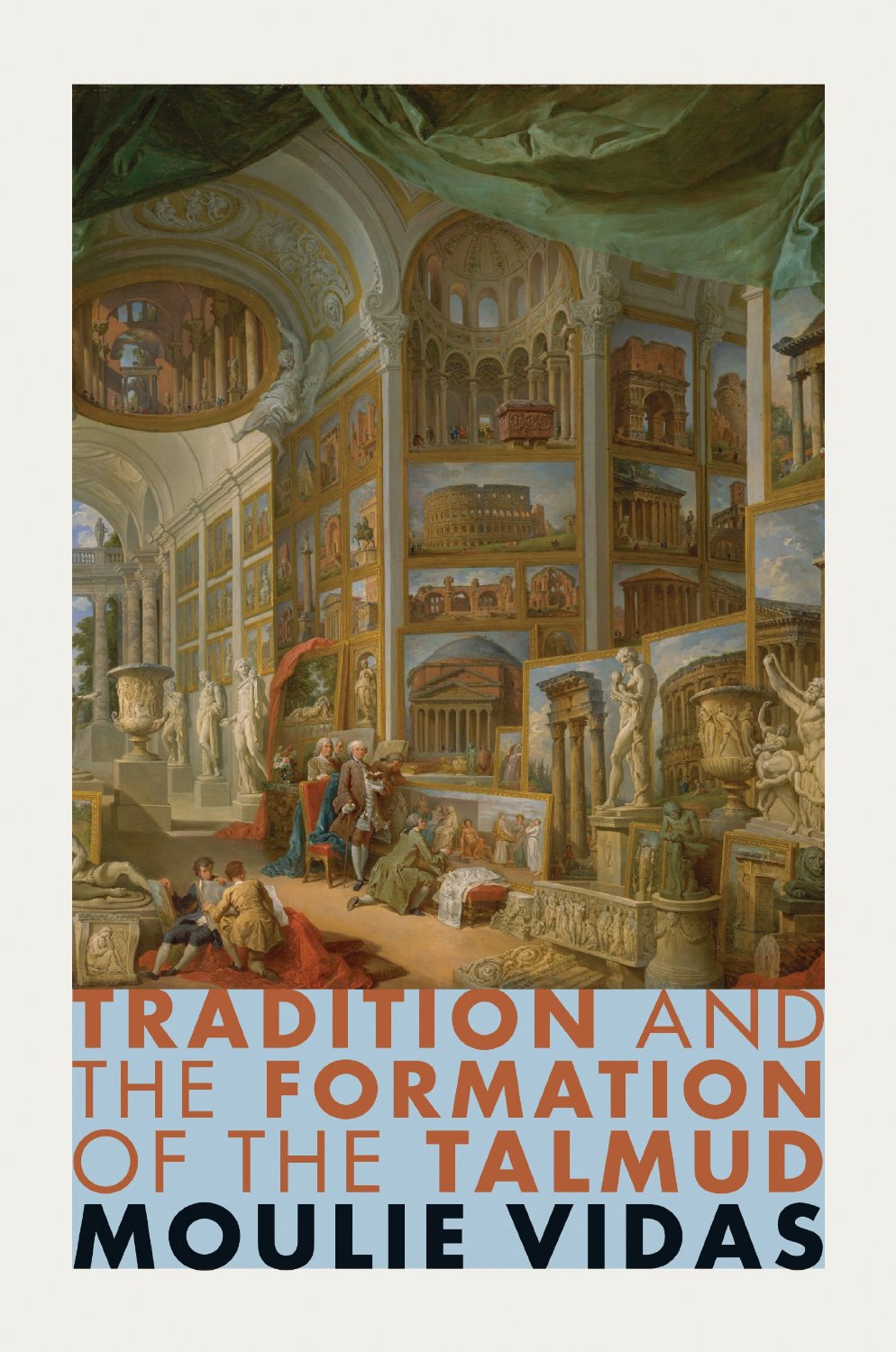
moulie book

הפרק הראשון דן בסוגיית הפתיחה של מסכת בבא קמא, ומראה כיצד הבבלי אמנם מכשיר את הקרקע לשילוב עמדת אחד האמוראים (במקרה זה, רב פפא) במסגרת הדיון הסתמאי, אך בה בעת מבליט את חוסר ההלימה בין דבריו ובין העמדה המובלעת של הדיון המקדים. כך למשל מזהה וידאס בקריאתו הרגישה מתח בין עיצוב עמדת הסוגיה בגוף ראשון רבים, לעיצוב עמדת האמורא נקוב-השם בגוף שני יחיד; מתח הנתפס על ידו כביטוי סימפטומטי להתמודדות עם מסורת העבר, המוצגת ברגיל כ’אחרת’ (ולפיכך כתלויית-הקשר), בניגוד להווה ‘שלנו’ (קרי, של עורכי הסוגיה), הנהנה מזכות-היתר של קביעת ההקשר, ובכך מפקיע את עצמו מקונטקסטואליזציה מצמצמת.

בפרק השני מנווט המחבר את דרכו בזהירות במחלוקת על אודות היחסים הכרונולוגיים בין החומר הסתמאי והחומר נקוב-השם, מחלוקת שהדיה ניכרים כמעט בכל דיון משמעותי בבבלי בעשורים האחרונים. וידאס מציע לראות את ההפרדה בין חומרים משני הסוגים – כלומר, את ריבוד (layerization) הטקסט התלמודי – כקונסטרוקט ספרותי של עורכי התלמוד ויוצריו; חומרים ארץ-ישראליים (במקרה הנדון בפרק זה, ובמקרים רבים אחרים) מאורגנים מחדש בסוגיה הבבלית בשכבות האופייניות לה, תוך הפרדת המסורת מהאנליזה, או כפי שהדברים מנוסחים לקראת סוף הפרק – תוך הפרדה בין שכבה מצוּטטת לשכבה מצטטת. הפער בין השכבות, לגבי דידו, אינו משקף פער היסטורי בהתהוותן, אלא מעשה עריכה מתוחכם המתמודד באמצעים סגנוניים עם הקונפליקט בין מסירה וחידוש:

The layered structure… combined a commitment to a faithful transmission of tradition and an independent and flexible engagement with that tradition. It allowed Babylonian scholar to contrast their own approaches with the teachings of the past, whether to showcase the scholarly virtuosity of an individual scholar or more generally to mark the distance between a classical past and their own age. The adoption of this structure was a move toward a more marked distinction between tradition and innovation. (p. 78)

במקום אחר בפרק מדגיש המחבר כי התלמוד עצמו – רוצה לומר, הטקסט הערוך, הסופי, ‘קולו של הבבלי’ שכבר הוזכר לעיל – הוא שמייחד מונחי ציטוט להבאת מימרות וברייתות, ומותיר את השכבה הסתמאית בלעדיה; התלמוד עצמו הוא שמעצב לעתים, אם גם לא תמיד, הבדלי שפה (עברית-ארמית) בין החלקים נקובי-השם לחלקים הסתמאיים. טיעונים אלה מודגמים בניתוח סוגיה ממסכת פסחים: וידאס מיטיב לשכנע כי במקרה זה הבבלי והירושלמי חולקים לא רק תשתית למדנית משותפת, אלא אף אבחנה פנימית בין אלמנטים נקובי-שם לאלמנטים סתמאיים, אלא שהבבלי מארגן אותם מחדש. ברוח זו, ובניגוד לרושם העולה לעתים ממחקרים המוקדשים לתופעות אלה, מטעים המחבר כי הבבלי אינו מוסיף מסגרת ספרותית לחומרים שחסרו אותה, כי אם מחליף מסגרת ספרותית אחת – באחרת. המסגרת החדשה מבוססת על אבחנה ההולכת ומתחדדת בין מסגרת סתמאית סיפורית-עיונית, המתווה את מהלך הסוגיה, לבין החומרים הנדונים על ידה, ויהא מקורם אשר יהא.הפרק השלישי דן בסדרה של סוגיות משלהי מסכת קידושין, ומראה כיצד אותו מרחק ביקורתי שנרקם בידי עורכי התלמוד בריבוד הסוגיות לשכבה מצוטטת ושכבה מצטטת, מושג לעיתים קרובות גם באמצעים אחרים, שאינם קשורים דווקא לפעולת הריבוד במובנה הצר. עדכון ועיבוד של מסורות ספציפיות, שינויים בפונקציות של אלמנטים בודדים במארג הסוגיה, ארגון מחודש של מבנים סיפוריים, פיתוח קומפוזיציות רטוריות מורכבות – כל אלה תורמים לא רק ל’התאמה’ של חומר ישן לסדר-יום חדש, אלא גם לעיצוב מבט ביקורתי על החומרים המיוצגים בסוגיה כ’ישנים’, או באופן רחב יותר כמורשת מן העבר.

הפרק הרביעי פותח את חלקו השני של הספר, ומציע בחינה מחודשת לתמה בבלית ידועה: אהדת החידוש כפרקטיקה למדנית ראשונה במעלה, המאפילה, בלשון המעטה, על פרקטיקות אחרות, כגון שימור והעברה של מסורות. תמה זו, שנדונה רבות במחקר, זוכה כאן לפנים חדשות, כמעט כפשוטו של ביטוי: אין היא עוד בבחינת עמדה ‘אקדמית’ תיאורטית של בעלי התלמוד ועורכיו, כי אם כלי לעיצובה של זהות עצמאית ייחודית, נבדלת מזהותם של ה’תנאים’, שתורתם מתמקדת במסירה בלבד. וידאס רואה בה עדות טקסטואלית למתח תרבותי בין קבוצות דתיות שונות בחברה היהודית בבבל, קבוצות המצטיירות על ידו במלוא ממשותן (ככל שהמקורות הספרותיים מאפשרים להעריך איזו ‘ממשות’). בהתייחסו למציאות הריאלית הוא משער, וראיותיו עִמו, שהגבול בין ‘מסרנים’ לחכמים לא היה בהכרח ברור כל כך; ממילא, תודעת הזרוּת המגדירה את היחסים ביניהם בפסקאות רבות מן הבבלי ראויה לדעתו להתפרש אף היא כקונסטרוקט ספרותי שתפקידו לגלם את המתח בין שתי הקבוצות, ובמישור סימבולי מופשט יותר – בין מסירה ואנליזה. כך מתווה הייצוג הספרותי (להבדיל מן ה’מציאות’) גבולות מובהקים בין ‘אנחנו’ (בעלי התלמוד, אנשי האנליזה), ל’הם’, כלומר, למי שמסומנים מעתה כ’אחרים’ (בעלי המשנה, ה’תנאים’ המשננים).

בהמשך לכך, הפרק החמישי עוסק בויכוח על הציטוט (או השינון), וממקם את דיוניו של הבבלי בעניין זה בתוך ההקשר הרחב יותר של העולם הסאסאני. מעתה, השוואת התנא המצטט למגוש הזורואסטרי – “דאמרי אינשי: רטין מגושא ולא ידע מאי אמר, תני תנא ולא ידע מאי אמר” (בבלי סוטה כב ע”א) – אינה מתקיימת בחלל הריק; סימוּן המצטט כ’זר’, תוך הפיכת ‘בעל התלמוד’ כנגדו לנציג אותנטי-יותר (כביכול) של התרבות היהודית, מזכירה לדעת המחבר נסיונות דומים להבניה עצמית של הקול ההגמוני הדובר בטקסטים נוצריים וזורואסטריים, דמיון הניכר מבעד להבדלים בפונקציה שממלא הזכרן-המצטט בכל אחת מתרבויות אלה.

האם לסיפור זה יש צד שני? כיצד עשויה להצטייר מערכת היחסים בין המסרנים ללמדנים, מזווית המבט של הראשונים? בהיעדר עדויות מפורשות, בגוף ראשון, לפרספקטיבה של המסרנים על אודות יחסיהם עם החכמים ‘בעלי התלמוד’, חלקו השני של הספר נחתם בנסיון מאלף לאתר קצה-חוט ל’סיפור המתנגד’ (counternarrative) שלהם. דמותם של ה’אחרים’ של הבבלי, התנאים ‘מבלי העולם’ (סוטה, שם), מגיעה אפוא לשיא ממשותה בפרק השישי, בו נבחנת ספרות ההיכלות, ובעיקר מסורת ‘שר התורה’ המשולבת בה, כצוהר אפשרי לעולמם הדתי. תוך הצבעה זהירה (ושמא זהירה מדי) על נקודות השקה אפשריות בין מסורת ‘שר התורה’ ודמותם של המסרנים המתוארים בתלמוד, משרטט וידאס קווים לדמותה של קבוצה דתית המעמידה אלטרנטיבה לתרבותם של חכמי בבל. אלטרנטיבה זו מצטיינת, בין היתר, בתפיסת מעשה הזכרון והציטוט כמעשה ליטורגי יותר מאשר אינטלקטואלי; הבנה, לגבי דידה, אינה בהכרח התכלית המרכזית של העיסוק הטקסטואלי, ואפשר אף שהיא סותרת תכליות נעלות ממנה. בתקופת הגאונים, רומז המחבר בפרק המסקנות שבסוף החיבור, משהו מן הלהט היצירתי של בעלי התלמוד הולך וקופא, בשעה שהתלות בתנאים-המסרנים הולכת וגוברת; בבל, כפי שהכרנוה, משתנה מן היסוד.

הקריאה בספר מעוררת מחשבה עד מאוד; הטקסט מתוּמרר כהלכה – כבבלי עצמו – וכל אחד מחלקיו זוכה לדברי הקדמה וסיכום מועילים, התורמים יחד להעמדת משנה סדורה ומגובשת (ואולי מוטב: ‘תלמוד סדור ומגובש’?…). את הדיון בו אבקש למקם בשלושה הקשרים שונים, הנתונים בחפיפה חלקית זה עם זה: המתודולוגי, הפואטי-רטורי, והאידיאלוגי.

ראשון – ההקשר המתודולוגי. נסיונו של המחבר לטפל בשאלות ה’גדולות’ הנוגעות לאופיו היסודי של הבבלי, ושל התרבות המשתקפת ממנו, מעלה בחריפות את בעיית מגבלותיה של הקריאה הצמודה (close reading). וידאס הוא ‘קורא צמוד’ מעולה – דוגמה טובה לכוחו הפרשני מצויה בניתוחו היפה לסוגיה מפרק ‘חלק’ בסנהדין (עמ’ 132-136) – אולם הקורא עשוי לתהות באיזו מידה הסוגיות המעטות-יחסית הנדונות בספר באופן מעמיק, יכולות להעיד על הבבלי כולו. הפתרון, לעניות דעתי, אינו טמון בוויתור על התמודדות עם אותן שאלות – מה גם שלוידאס תשובות מפרות עד מאוד – אלא בפיתוח מתודולוגיה הולמת לדיון בקורפוס רחב. ברוח זו, מעניין לחשוב על תרומתה האפשרית של ‘קריאה רחוקה’ (distant reading) מבית מדרשו של פרנקו מורטי, הן להתבוננות רפלקסיבית בכבלי הקריאה הצמודה/הקרובה, הן לבחינה שיטתית של התופעות הנבחנות בספר שלפנינו (בעיקר בחלקו הראשון). דוגמא פשוטה לכך יכולה לשמש אבחנתו של וידאס, שנזכרה לעיל, בין ייצוג דברי חכם נקוב-שם בגוף שני יחיד, לייצוג ‘קולו של הבבלי’ בגוף ראשון רבים: מדובר באבחנה לשונית-סגנונית מוגדרת הניתנת למדידה, לכימוּת ולמיפוי (באמצעים ‘אנושיים’ או ‘חישוביים’), בעזרתם ניתן יהיה להציע, בשלב ראשון, תשובות חלקיות לשאלות כגון: בכמה סוגיות היא מופיעה, ומכמה היא נעדרת? מתי הסוגיה נותנת לחכמים לדבר ‘יותר’, ומתי היא נוטלת את זכות הדיבור לעצמה? האם התופעה נפוצה יותר בסוגיות פתיחה של מסכתות ופרקים? האם יש מִתאם (קורלציה) בין הופעתה בסוגיות מסוימות, לנוכחותם של מונחי משא-ומתן קבועים-פחות-או-יותר באותן סוגיות? באיזו מידה היא משקפת הרחבה של תופעות דומות בספרות הארץ-ישראלית? ומשעה שתשובות לשאלות אלה יונחו בפנינו, יגיע זמנו של המבט הרפלקטיבי, כיאה ל’קריאה רחוקה’ טובה: מה משמעותה של התופעה? מדוע היא מתנהגת כך ולא אחרת? כיצד היא מאירה את דמותו של הקול האומר ‘אנחנו’ במרקם הטקסט התלמודי, במסגרת ה’מחזה’ הלמדני שסוגיות רבות מעמידות בפנינו? בקצרה, סקירתה לאורך ולרוחב הבבלי – הבבלי כולו – עשויה להוליד טיפולוגיה עשירה של סוגיות, מתוחה על פני ספקטרום לשוני-סגנוני נרחב, ונושאת מימד תרבותי-אידיאולוגי.

שני – ההקשר הפואטי-רטורי. וידאס מייחס לסוגיה התלמודית, בצדק, איכויות פואטיות ורטוריות מובהקות (אף על פי שמונחים אלה כמעט נעדרים מן השדה הסמנטי הרגיל בספרו). איכויות אלה, על פי רוב, מבטאות לדעתו את ‘קולו של הבבלי’ – המצטייר בין השיטין כקולו של עורך רב-עוצמה, העושה בחומריו כבתוך שלו. הנחות אלה גוררות אחריהן מערך טיעונים שלם: כך, וידאס מבכר באופן שיטתי הסברים המייחסים כוונה ומודעות ליוצרי הטקסטים (ראו לדוגמא עמ’ 143, וכמותו רבים), ומצמצם למינימום הסברים ‘טכניים’ או ‘פורמליסטיים’; כך, נקודות של מתח או של אי-התאמה מתפרשות על ידו תדיר כביטוי לכוונה חתרנית של העורכים (כפי שעולה למשל מסוף הפרק הראשון), ולא, למשל, כתוצאה מקרית של התרחבות השיח הלמדני, או של כוחות צורניים אחרים הפועלים על הסוגיה (דוגמא טובה לכך היא טיפולו במסורת על שם האל בבבלי קידושין עא ע”א, הנדונה בעמ’ 99-100). כל אלה הכרעות מטא-פרשניות סבירות, מוצדקות לגמרי במסגרת הפרדיגמה העיונית של וידאס, ואפשר גם שקשה להעניק לסוגיה משמעות בלעדיהן; אך לכל הפחות יש מקום להרהר במערכת היחסים ההדוקה הנרקמת באמצעותם, כמו גם באמצעות מבנה הספר כולו, בין צורה לתוכן – צמד הראוי בעיני למבט חשדני יותר, מסוייג במידה.

שלישי ואחרון – ההקשר האידיאולוגי. בהשראת הגותם של ולטר בנימין וג’ורג’יו אגמבן, טוען וידאס כי חשיפת מנגנונים המכוננים ‘אי-המשכיות’ בין מסורת למוסריה, מעניקה לעבר קיום עצמאי, ובמשתמע – מייחסת לו משקל רב יותר מזה שניתן לו בדגמים המדמים המשכיות הרמונית יותר בין עבר להווה. על רקע טענה זו, מעניין ואף מפתיע להשוות את תפקידם של בנימין ואגמבן בספרו של וידאס, עם התפקיד ההפוך השמור להם, להבנתי, במחקר העכשווי של הספרות העברית החדשה: בשדה זה הם מוזכרים לאחרונה שוב ושוב דווקא כמי שמאפשרים לחשוב על זיקותיה הרצופות של הספרות החדשה, החילונית-לכאורה, למקורות יניקתה הקדם-מודרניים הדתיים. הנה כי כן, בחקר הספרות הרבנית, תפיסה רציפה של המסורת – תפיסה מתבקשת למדי, כשלעצמה – מוצגת (בספר שלפנינו, ולא רק בו) כ’לא-ביקורתית-מספיק’, ולפיכך מומרת בנראטיב של שבר או סדק היסטורי-תרבותי; ובחקר הספרות החדשה, לעומת זאת, דווקא תודעת משבר היסטורי-תרבותי – תודעה מתבקשת למדי, כשלעצמה – היא שמוצגת כ’לא-ביקורתית-מספיק’, ולפיכך הולכת ומומרת בנראטיב מסורתי, הרמוני לפרקים. אני מקווה שדי באנלוגיה זו כדי לשלול – בשני השדות המחקריים – התנגדות לנראטיב אחד כאילו הוא ‘מדומיין’, והערצה לאחר כאילו הוא ‘ממשי’; נדרש כיוונוּן-תדרים עדין יותר.

אך נשוב אל העיקר: חוויית הקריאה בספרו של מולי וידאס מזכירה לעתים התבוננות בצידו הפנימי של בגד יפה. לא משום שהוא מגלה את התפרים הנסתרים המחברים את חלקיו השונים של הבגד יחד – הללו, הרי, גלויים וידועים זה מכבר לכל הרגיל בבגדים (ובהתאמה: לכל מי שרגיל בקריאה ביקורתית של הטקסט התלמודי) – אלא משום שתפרים אלה עצמם זוכים רק כך לבּוֹלטוּת אסתטית (ובהתאמה: אידיאולוגית); הם אינם רק אמצעי טכני המחבר יחד, בעדינות אלגנטית או ברישוּל גס, מרכיבים שונים, אלא מנגנון אמנותי המסמן ומבליט ומעצים את שונותם של המרכיבים המצויים משני עבריו. ומן המשל אל הנמשל: חידושיו המרשימים של וידאס אינם חושפים אלמנטים לא ידועים בטקסט התלמודי, אינם מצביעים על רובד נוסף שנותר עד כה בצֵל, אלא, בפשטות, מזמינים את הקורא לשנות את הפרספקטיבה; וזו החדשה, לטעמי, ראויה ומבטיחה ביותר.

איתי מרינברג-מיליקובסקי משלים בימים אלה את עבודת הדוקטור שלו במחלקה לספרות עברית, אוניברסיטת בן-גוריון בנגב, תחת הכותרת “למעלה מן העניין: יחסי הגומלין בין סיפור והקשרו בתלמוד הבבלי – סיפורים מרובי-הופעות כמקרה מבחן” (בהנחיית ד”ר חיים וייס ופרופ’ תמר אלכסנדר).

Standard
Announcements, English, Guest Posts

A Tantalizing Tale of Temura Fragments – Guest Post by Noah Bickart

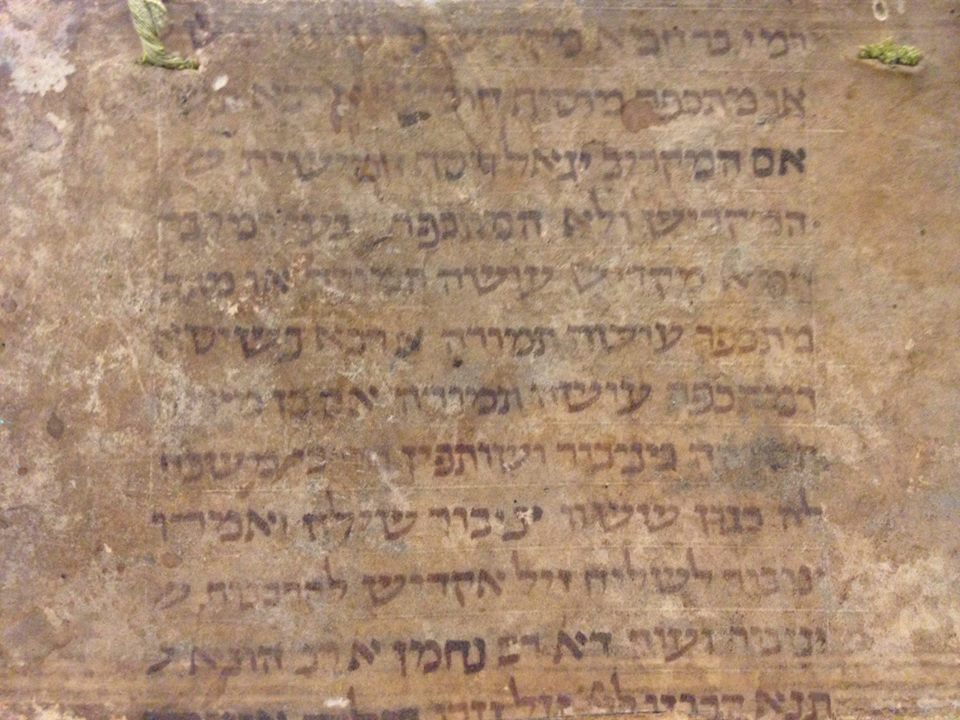
As a Talmudist at the Jewish Theological Seminary of America, I have long been accustomed to fantastical tales about the discovery of ancient manuscripts of the Babylonian Talmud. That famous picture of Schechter in the Geniza hangs everywhere in our halls. We are taught from the beginning not only to read Raphael Nathan Rabinovitch’s Dikdukei Soferim, but to imagine him on some Sunday morning in Rome, unlocking the Vatican Apostolic Library with his own set of keys, sitting down to transcribe Vatican 109 by candlelight. We hear of our own Haim Zalman Dimitrovsky, who supervised the doctorates of so many of our own teachers (Shamma Friedman, Mayer Rabinowitz, Joel Roth, and Burton L. Visotzky among countless others), roaming the monasteries of Italy, excato knife in hand, no binding safe from the search for more Seridei Bavli. And yet, we are accustomed to thinking that the time for these kinds of monumental discoveries, of even a few leaves of a Tractate stuffed into the binding of a 16th century print, has long past, and that only European libraries and monasteries might hold more finds. You can imagine my surprise when I found myself staring at an image in a Facebook message of what looked to my own eyes as an early European manuscript of the Bavli, apparently having formed the cover of a book of Church Music published in Prague in 1604, now housed in Fales Library at New York University.

A young scholar of musicology, Sam Zerin, who happens to be married to a former student of mine, Rachel Dudley Zerin, is pursuing a doctorate under Professor Stanley Boorman at NYU. Dr. Boorman, with his students, is now working on this collection, comprising about a dozen volumes, all of which are bound in Vellum manuscripts, mostly Latin music texts. Yet three volumes are bound in parchment from a single manuscript in a language Dr. Boorman didn’t read. Sam, his student, immediately recognized the script as Hebrew, and offered to ask his wife Rachel if she knew anyone at JTS who might be able to identify the text. Having been subjected to my (in)famous synopses in a class she took with me on Aggadah in Seder Nashim some years ago, Rachel had Sam send me some pictures of these bindings.

When I saw the first picture, it became clear that this might actually be a major discovery. The topic was Temura (הוא לה’ קריבה ואין תמורתו לה’ קריבה) and featured a dispute between Rava and Abaye, meaning that what I was looking at was either the Babylonian Talmud or some text which quoted or paraphrased it. Some brief searching in the Bar Ilan Responsa database led me to assume that this might be a section of Yalkut Shimoni‘s version of Temura 3b, which more closely matched this MS than did the printed texts of the Bavli, yet searching in the Lieberman database of Talmudic manuscripts revealed that indeed this was a manuscript of Temura. At this point I called Professor Neil Danzig and sent him the pictures. The questions were broad: might this text hold the key to resolving the dispute between Y.N. Epstein and E.S. Rosenthal on the relative age and provenance of the “Lishna Aharina” sections of Temura? How does this version of Temura compare to the fragments of this chapter found in the Geniza? Neither of us slept. I spent the night immersed in Temura.

When we spoke in the morning, we were both convinced that the covers from these three books were fashioned from a single manuscript of (or at least the first chapter of) Temura, written somewhere in Europe in the 12th or 13th century. Professor Danzing noted three features which pointed to an early date and “Proto-Ashkenazi” provenance for this text. First, the divine name is represented by three and not two letters “yod.” Second, the manuscript shows clear signs of striation. Third, the letters, “gimel” are elongated. We made an appointment to visit Dr. Boorman and these books at Fales Library.

#4

A picture of one of the fragments.

The meeting between Drs. Boorman and Danzig was a beautiful example of everything that is right in the academy. Two scholars whose fields almost never overlap were brought together by a single artifact. Each scholar was able to explain in detail various but not overlapping aspects of this object, and each was able to convince the other of the worth of this object for his respective field. It was Professor Boorman who made the case to the conservator on duty that the bindings really needed to be opened, that the worth of this text to our field was worth potentially damaging his book.

Needless to say, I plan on transcribing this fragment in the coming months, comparing its readings to all the extant witnesses of the tractate as well as other variants recorded in the Shita Mequbetzet, and related works, with the aim of publishing an article on the fragment and its textual tradition. In the meantime, if any of the readers of the blog have any insights or thoughts about how to proceed, or know of any witnesses to Temura not listed in the Sussman catalog, I would love to hear about them.

Noah B. Bickart is an an adjunct instructor in Talmud & Rabbinics at JTS where he also serves as the Principal of the Rebecca and Israel Ivry Prozdor High School Program and is completing a PhD on scholastic terminology in the Babylonian Talmud and parallels to Syriac Christian literature.

Standard
English, Guest Posts, Recent Publications

On Paul Mandel’s ‘Was Rabbi Akiva a Martyr?’- Daniel Boyarin

Daniel Boyarin’s study of martryology in late antique Judaism and Christianity has been one of the most enduring legacies of his scholarship. A recently published study by Paul Mandel on the martyrdom of R. Akiva in rabbinic texts raises some questions about Boyarin’s readings, and it is accompanied by a lengthy Appendix  on the matter (available here with permission from the author and publisher). The Talmud blog is honored to provide a space for Professor Boyarin to respond.

My teacher, Prof. Saul Lieberman, May the Memory of the Righteous be for a Blessing, used to say that the proper Festchrift for a senior scholar was one in which his students and colleagues corrected all of the errors he or she had made in his work over the decades. I begin, then, by thanking Prof. Paul Mandel for catching and correcting an important error in my work, one that was, moreover, compounded by successive revisions of the argument in which the initial error was never corrected until quite recently. I also wish to congratulate him on a very important and largely compelling article. Let me step back a moment and fill in the background here for those who might not know of what I speak.

Mandel recently published an important article (“Was Rabbi Aqiva a Martyr? Palestinian and Babylonian Influences in the Development of a Legend,” in Ronit Nikolsky, Tal Ilan  eds, Rabbinic Traditions between Palestine and Babylonia (Brill 2014))  in which he argued that in the Yerushalmi and in the earlier stages of the Bavli’s transmission, the story of Rabbi Akiva’s death [Berakhot 61b] is not portrayed as a martyrdom but as something he calls a “political drama” (It’s not clear to me how a martyrology is ever not a political drama, but nonetheless). The important evidence is that in the earliest forms of the text as preserved in one family of Bavli MSS, significant markers of the martyrological character of the story are missing, only to be added in later families of manuscripts to Massekhet Berakhot. The argument, and it is a quite compelling one, leads to the conclusion that the martyrological elements in the story are a later addition, perhaps—even probably—is added to the story in the Byzantine era and under the impact of Christian martyrological literature. As I’ve said already, by and large, I find this article convincing. The conclusion, of course, invalidates my own interpretations of this story in its form as a martyrology as late-ancient and intimately bound up with the formation of the very notion of martyrology as a Jewish/Christian co-invention in the third and fourth centuries. One is always sorry to lose a treasured reading, but זה בונה וזה סותר,כך דרכה של תורה. The work lines up with other analyses of this type (including at least one of my own) in which we see that notions that we ascribe to the Bavli are really the product of late stages of transmission of the text and the earliest forms of the Bavli-text as found in manuscripts line up much more closely with the Yerushalmi. Indeed, Rabbi Akiva may not have been fully understood as a martyr until some time later than we thought, although it may not be gainsaid that there are martyrological moments even in the earliest Bavli transmissions of the story.

As said, Mandel is to be congratulated on this achievement. He, however, devotes quite a bit of time in the article, and especially in an appendix, discussing an egregious error that I made in doing my own work on this topic, and it is this aspect that I would like to take up here. First off, as said, of course he is right. When I originally translated this text, I simply skipped an entire line in transcribing from the Vilna edition of Berakhot, a regrettable error in its own right, especially since the line that I skipped strongly supported my interpretation of the story.

Here is the bit of text, as I wrote it and as it ought to have been transcribed. I wrote:

In the hour that they took R. Aqiva out [to be executed], his disciples said to him, “Our master, so far? [i.e., is this necessary].

I should have written:

At the hour that they were bringing out Rabbi Aqiva for execution, it was the time of the reciting of the Shema, and they were flaying his flesh with iron combs; and he was accepting upon himself the yoke of the heavenly kingdom. His students said to him: Our master, so far? [i.e., is this necessary?]

Mandel makes much depend on this missing line of text:

What is particularly significant in this text [i.e., Boyarin’s mistaken text] is the fact that the query of the disciples to Rabbi Aqiva appears directly after the exposition declaring his being taken out for execution; there is no mention of the torture or of Rabbi Aqiva’s recital of the Shema at this time. This means that the disciples’ alarmed question, “Our teacher, so far?,” must be taken to be a challenge to the very act of his impending death, as Boyarin indeed explains in a bracketed addition: [“i.e., is this necessary?”], meaning “is this [acquiescence to your] execution necessary?” Rabbi Aqiva’s answer, based upon his midrashic comment to Deut 6:5, thus becomes a forceful argument for the “joining of Eros and Thanatos”; Rabbi Aqiva’s message to his students is: “Death is not only required of me at this time [“it is necessary”], but all the more: I have actively sought out just this martyrdom all my life as a fulfillment of the commandment to love God.”

I cannot, for the life of me, see how the addition of the elements of Rabbi Akiva being flayed alive, nor that the moment was the time of the reading of the Shema, detract one iota from the martryological interpretation of the story as it appears in the textus receptus. The students, nonetheless, see their teacher being flayed, a grisly form of execution, and ask whether it is necessary that this awful thing happens, to which he answers, yes. Rabbi Akiva, moreover, prepares to accept the yoke of the kingdom, i.e., his tormented death, at this very moment by reciting the Shema, as it happens. It is trivializing of the story in the extreme to make the disciples question a merely halakhic one: Is it necessary to read the Shema at such a time? Their question remains directed at the master’s impending death as well as present pain. His answer is precisely that through the recitation of the Shema at the time of being tortured and killed, he fulfills the mitzva of “with all your soul.” Had the addition of the line I inadvertently skipped been lethal for my reading, this would have been a much more important error than it is. I cannot see, however, how adding the detail of Rabbi Akiva being flayed alive (certainly a martyrological trope) or the moment being the time for the reading of the Shema detracts from the martyrological reading of the textus receptus. If anything it surely enhances that character.

אמר להם: כל ימי הייתי מצטער על פסוק זה:
‘בכל נפשך’ (דברים ו ה)  אפילו נוטל את נשמתך. –
אמרתי: מתי יבא לידי ואקיימנו?

Any way that it is construed then, the textus receptus surely describes a desire for martyrdom on the part of its hero protagonist, with or without missing lines of text. Despite having little effect on the interpretation of the passage in the textus receptus, it remains a regrettable error nonetheless. The same error was repeated, moreover, in three other publications about this narrative both in Hebrew and in English over the years. I am chastened and embarrassed.

More egregious than that is the evident fact that even when I claimed later on in one of the publications to be citing from a manuscript, the error persisted, so once again the work was sloppy at this point. I had clearly been reading the MS at the time of the later work, as a large new chunk of text considered there was copied from the MS. At that time, moreover, some elements of the variant readings of the Oxford MS did enter my translation (interestingly the variant that Mandel considers “most significant,” the repetition of אמרו, is represented in my revised text!) of this story then. The haplography (if that be the right term for a skipped line) remained in place, although, to be sure, the flaying is indeed absent in the Oxford text, and that is an important part of Mandel’s argument as well. The repetition of the error is, to me, unaccountable. I hope that there are few errors of such a nature in others of my works but hardly imagine that none exist, much as I have tried to be careful over the years both with copying, translating, and checking manuscript variants. It is necessary to restate, however, that the skipped line does not affect my original interpretation of the text; as said above, putting it back in only enhances my reading. In the latest version of the text (the recent Hebrew translation of Intertextuality and the Reading of Midrash), the line is restored with only positive effect). The error itself is, therefore, regrettable and mortifying but not, in itself, of great interpretative significance.

The argument of my various readings of this narrative (and they are in different discursive contexts and themes) stands even better once the text of the textus receptus is restored. Much of this is, therefore, a red herring that detracts from the genuine innovation of Mandel’s own case which I would now quickly lay out. Where earlier scholars in general read the story in the Bavli as we have it as representing an early (at least ideological) reality, Mandel shows that it reflects rather a later ideological reality. He does so by demonstrating that the earliest witnesses to the Bavli text read quite differently: in them, the disciples’ question is not: Is it necessary to suffer and die, Master, but rather is it necessary to read the Shema in such a condition of danger. Where some—not Boyarin as Mandel himself remarks—would have read the text as representing something about the actual death of R. Akiva and some, Boyarin, as representing fairly early rabbinic representations of that death, Mandel thus shows that in its earliest form it is considerably less martyrological in its import and that the strongly martyrological elements are later additions to the text during its transmission. Where, then, I had thought it to be evidence of a third or fourth century rabbinic contribution to a developing shared discourse of martyrology, Mandel shows, I think, that it is rather evidence for continuing later influence of Christian martyrologies on the developing talmudic text. I by and large accept this conclusion which takes Prof. Lieberman’s point from The Martyrs of Caesarea and expands it. The story of R. Akiva’s martyrdom is thus a much less apt example for an early, common, discourse shared by Rabbis and Christians in Caesarea. So be it; a fine and important conclusion. It is curious, however, that Mandel in treating only the fate of this story, completely ignores the rather significant other evidence that I have cited for early rabbinic martyrological discourse defined exactly as I have done as eroticized and even desired death for God. Within the mini-corpus of my texts on this subject, there are citations and discussions of Sifra Ahare Mot 8,3, on the “three boys,” Sifre Devarim on the death of Rabbi Hananiah ben Tradyon, and especially the Mekhilta Shirata 3 on Rabbi Akiva’s own drasha: We have loved you until death. Even without the story in the Bavli, the inference that eroticized death, a conflated eros and thanatos, was quite early found in rabbinic literature seems quite sound. (And, this, it should not be necessary to add, even without accepting ascriptions of tannaitic sayings to their alleged authors or imagining that the tannaitic midrash took shape before the late third or even early fourth century).

Such deliberate, not accidental, elision of evidence is evidence of Tendenz. Mandel shows his hand when he claims that his refutation of my historical interpretation of the Bavli text destroys entire the thesis that I have developed in Dying for God and even more so in Border Lines of ongoing blurred borders between nascent Christianity and rabbinic Jews. This, I suspect, is his real target, and it is arrant nonsense. The argument about Rabbi Akiva’s alleged martyrdom is only one chapter out of four in the former book and not even mentioned (as Mandel concedes) in the latter one, in which there are a couple of hundred pages of textual evidence, analysis, and reasoning that have nothing to do with martyrology at all. Moreover, in the Hebrew publication in the Dimitrovsky volume, there is an extensive discussion of other martyrological tales from the Talmud, as well from Tractate Avoda Zara and translated from the universally acknowledged best MS of that text, in addition to the discussions of tannaitic midrash as mentioned above. There may very well be other textual errors lurking in both books, and surely other ways of construing the evidence, ones that might even convince me, as Mandel has here, that I need to revise my thesis, but invalidating one important and highly evocative piece of evidence does not go far in challenging a thesis that is argued on a much much broader evidentiary base. Mandel’s argument on this score, then, is an argumentum ad hominem (by discrediting the author of the argument and not the evidence or reasoning) and as such simply and plainly invalid.

Daniel Boyarin is Hermann P. and Sophia Taubman Professor of Talmudic Culture at the University of California, Berkeley.

Standard
English, Reviews

Straight-up Philology, Served Cold

Robert Brody, Mishnah and Tosefta Studies, (Jerusalem: The Hebrew University Magnes Press, 2014)

The “Jerusalem school” of rabbinics has traditionally avoided writing in any language other than Hebrew. In his introduction to the collected works of J. N. Epstein, Ezra Zion Melammed wrote that his teacher, J. N. Epstein “while living in the exile of Europe, wrote most of his studies in foreign languages, and from the day he ascended to Jerusalem, to teach at the Hebrew University, wrote all his studies in Hebrew […]. He also rewrote his opus magnum, Introduction to the Mishnaic Text, which was written in German and ready for the press, in his clear Hebrew […].” Even in the United States, students of this school published mainly in Hebrew: Saul Lieberman, Israel Francus, Abraham Goldberg, and Shamma Friedman wrote most of their enduring and important works in Hebrew (David Weiss-Halivni is somewhat of an exception to this rule, but the bulk of his scholarship, too, is written in Hebrew). One of Jacob Neusner’s standard complaints was the lack of scholarship in “a European language” –  and the field has seen a sea change in this regard. Most scholars of rabbinics now publish extensively if not exclusively in “European languages,” especially English.

srvrutil_getImg

Except, of course, in Jerusalem. Here, Robert Brody is somewhat of an exception. He is the only Hebrew University professor of Talmud who published an important monograph in a language other than Hebrew. Mishnah and Tosefta Studies now joins his The Geonim of Babylonia and the Shaping of Medieval Jewish Culture as an important addition to Brody’s English oeuvre. It is part of a long-term project, which Brody describes in his introduction, of a commentary on Bavli Ketubot out of which grew a commentary on Mishnah and Tosefta Ketubot. In the course of that work, Brody understood that he wanted to “tackle in a more systematic way several topics about which I had thought, and sometimes lectured, over a period of years.” And he wanted to do it in English. The language shouldn’t fool you, thought: Brody might be writing in English, but the book is decidedly Jerusalemite: a crash-course in straight-up philology, clearheaded and free of jargon, served cold.

Brody takes us back to basics: examining all the evidence, sometimes offering simple solutions for complex problems, and sometimes admitting cheerfully that he has none. He moves abruptly from example to example – it seems that he is really interested in presenting examples, and that the niceties of introductions and conclusions are so burdensome that he sometimes does away with them – stopping to point out how they refute this or that scholarly consensus that has solidified over the years.

In the four parts of the book, Brody discusses four scholarly paradigms that have become dominant over the last decades in the field of Mishnah/Tosefta studies. He discusses each one with a series of test cases, through which the reader can grasp Brody’s guiding principle: the evidence is always prime, each case is different, and scholarly paradigms are only as useful as the answers they provide. Each of these paradigms is associated with a scholar or several scholars who introduced them to the scholarly community. In each case Brody discusses the work of those scholars, often pointing out that the paradigms which are named for them are far from their original intent. The four paradigms are:

1. There are two distinct versions of the Mishnah, one influenced by the Bavli and transmitted with the Bavli, the other influenced by the Yerushalmi and transmitted alone. An outgrowth of this paradigm is that the MSS of the Mishnah are considered more “Palestinian” and thus more “authentic” than the Mishnah in the Bavli. This paradigm was developed by Jacob Sussman and David Rosenthal, and is discussed little beyond Jerusalem and its satellites (e.g. Christine Hayes’s Between the Babylonian and Palestinian Talmuds, which problematizes this thesis as well). While this thesis seems simple enough – and of little importance to non-philologists – it has important implications for the history of the redaction and transmission of the text of the Mishnah, and also emphasizes the fuzziness between redaction and transmission in the first place. As Ishay Rosen-Zvi notes, studies of the orality of the Mishnah, for example, would do well to think of the Sussmanian assertion that the Mishnah was a completely oral text in the formative stages of its creation, as well as note the scholastic changes that the Mishnah underwent while it was being studied in the Talmudic academies which placed it at the center of their curriculum. Or did they? Brody tests Sussman-Rosenthal’s thesis of Talmuds influencing Mishnah text by examining several examples of discrepancies between the two versions of Mishnah which do not match this model. For example, there is no Babylonian Talmud on tractate Shekalim, but the distinction between the two strands of transmission  -independent manuscripts versus Bavli manuscripts – still exists. Additionally, there is no Palestinian Talmud on the order Kodashim, but the distinction still stands. Brody discusses the ways in which we could account for these differences in the absence of a simple model like the one suggested by Sussman and Rosenthal.

2. The Tosefta predates the Mishnah. This paradigm is often attributed to a series of articles which culminated in Shamma Friedman’s Tosefta Atikta (Ramat Gan: Bar Ilan Universtiy Press, 2003). Brody agrees that “there is no doubt that Friedman is correct in claiming that the Tosefta sometimes preserves sources which are identical or very similar to those underlying specific passages of the Mishnah.” In Brody’s opinion, however, the operative word is sometimes. Since he has no general preference for one option over the other, he presents himself as an impartial observer, in each case trying to point out which option makes more sense (his treatment of Judith Hauptman’s Rereading the Mishnah, which espouses a similar point of view but makes more far-reaching claims, is somewhat less deferential).

3. The two MSS of the Tosefta present versions of the Tosefta which are independent of each other, and which have their origins in the distant past of the redaction and early oral transmission of the Tosefta. Here Brody really shines as a master philologist. In  his opus magnum, a slim Hebrew book called The Textual History of the Sheiltot (New York and Jerusalem: AAJR, 1991) Brody offers his stemmatic analysis of the relationship between all known textual witnesses of the Geonic work Sheiltot, a compendium of sermons on the weekly Torah reading, based mainly on the Babylonian Talmud. While Sheiltot has nine full MSS and countless more textual witnesses, Tosefta has between three full witnesses and some additional partial ones. Brody transferred his philological acumen from one work to the other to point out some facts that have the potential to revolutionize the textual study of the Tosefta.

First, Brody asserts that all the witnesses of the Tosefta are descended from one single written exemplar. Even the major discrepancies between the manuscripts can be explained according to this model. Thus, unlike the Babylonian Talmud, the Tosefta is best analyzed as a written text, and the variant readings as errors or corrections in the transmission of a written text. Most intriguing is his discussion of what Yoav Rosenthal has termed “changes of place,” when one segment appears in different places in two witnesses not as a part of a list with an interchanging order of segments, but simply on its own. While Rosenthal in a recent article uses these changes to reconstruct a complex redactional history of the Tosefta, Brody is – as usual – skeptical. He prefers to ascribe these changes to insertion of marginal glosses in the wrong column, noting that the gap between the two places where these kinds of segments are located in the two MSS tends to be roughly the size of one column of text or its multiples – 140 words or so (pp. 50-51).

4. Rabbinic texts are best presented in diplomatic editions, according to the “best manuscript” available. Brody “passionately” disagrees, and thus the book ends with an “impassioned plea” to change the dominant practice of printing rabbinic texts as diplomatic editions of one manuscript, rather than making educated editorial statements as to the wording of the original text itself. Two recent editions come to mind – Kahana’s diplomatic edition of Sifre Numbers, as opposed to Milikowsky’s eclectic edition of Seder Olam, which is closer to Brody’s plea.

The plea itself is in fact somewhat less than “impassioned,” as is the rest of the book: Brody is direct and curt. This book has no funny anecdotes about renaissance scholars , no apologies for the relevance of scholarship, and definitely no cultural criticism. In a field that constantly says its texts are indeterminate and fluid while adhering for the most part to whatever can be found in the canonized translations and computerized databases, Brody refreshingly lacks any desire to self-reflect. Words stand in the center of this book, and perhaps out of respect for those same words, they are used sparingly.

The book is generally well-edited, except for the too-common passive constructs and several copyediting glitches – for example, the name Lieberman (as in Saul) is sometimes spelled Liebermann and sometimes not. This could have easily been corrected. I would have also appreciated Hebrew texts as well as the translations Brody provides, but they will probably be in the Hebrew book slated for publication soon. This book is an important contribution to the textual study of Mishnah and Tosefta, an important corrective to comfortable paradigms and rules-of-thumb that dominate rabbinics, and for the first time all of this is available in English. Ignore it at your peril, and assign it to your graduate students.

Standard
English, Ruminations

Stray Thoughts on Art History and Talmudic Philology

Perhaps more than other historical disciplines, art history is not merely auxiliary to art, it is integral. It can and has been argued that what renders a banal object a bona fide art-object is some conscious level of participation in the story of art. This is a deep truth about visuality – one which was once compellingly evoked in a scene about a time-traveling modern who baffled his nineteenth century friends with amateurish, minimalist etchings on frosted glass. And it is especially true of modern and contemporary art despite – or maybe because of – incessant attempts by provocateurs to try and blow up art history with one fell swoop of shocking red paint. When you vigorously oppose history’s centrality you only enhance it.

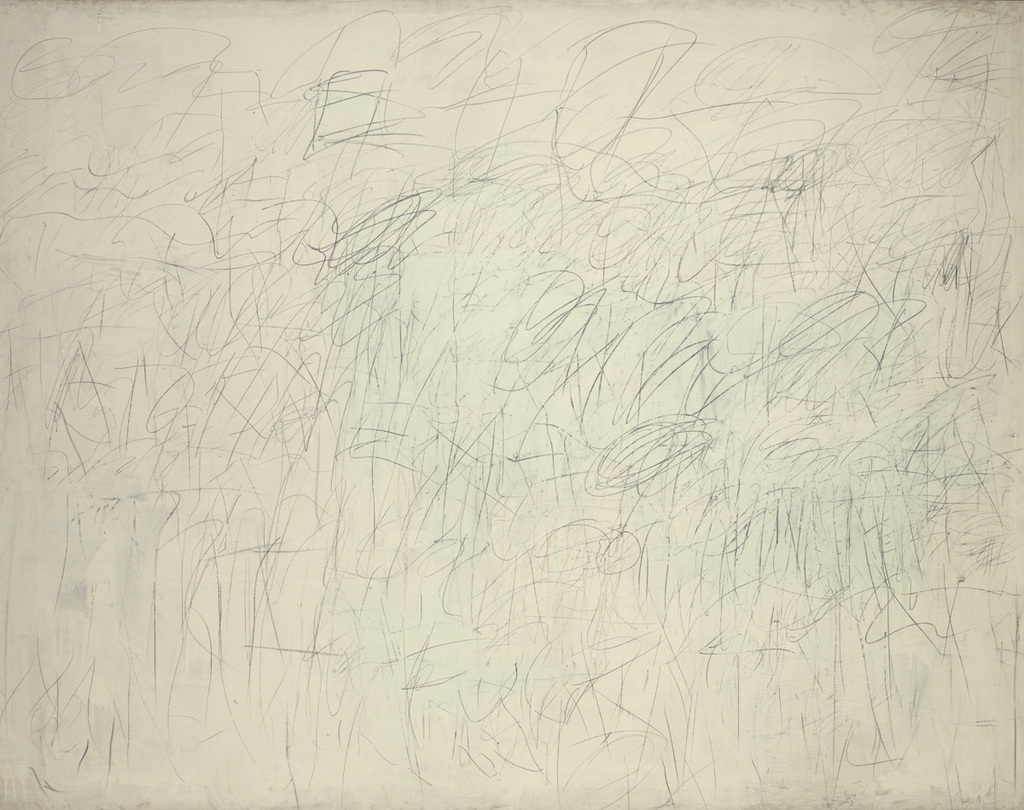
Cy Twombly, Academy

At New York City’s MOMA, the viewer snakes his way through the museum’s classic fifth and fourth floors and thereby traces a visual narrative with his feet and eyes. The curators have ever so carefully placed these famous galleries in their “correct” sequence with corresponding plaques on the wall so that the story coheres and the art properly resonates against its general historical milieu and its own art historical context.  Without a previous “academy” to react to, Cy Twombly’s Academy is just vulgar scribbling (it of course remains that even after). One might say that herein lies the successful retort (teshuva nitzahat) to the everyday ‘heretics’ of modern art: Yes, you might technically be able to execute some of  the chaos of contemporary art on your bedroom wall, but did you do it at the right moment, with the right intention, and with the right interviews and critics drawing out the greater significance of the project?  Regardless, something is lost when art must always narcissistically fold into its own history. The pleasure of the thing, and perhaps even its essence, gets away.

For some time now the dominant critical mode of  studying the Babylonian Talmud has consisted of dissecting the sources on the page and placing them on a linear, chronological graph. The early tannaitic passage evolves into a later version, which is reinterpreted by early amoraim, reread by late amoraim, recast by editors, and reworked by redactors. Our mantra is a stutter: “re- re- re- re- re-“.  If a Talmudist succeeds in unraveling this history and explaining its historical  development – or better yet – correlating it to its historical context,  the assumption is that he has succeeded in solving it.  The thrill of this scholarly chase, its secret sleuthing and precious eureka moments, can be exhilarating, but also exhausting. What is left after the “problem” of a sugya’s development is “solved” other than to exhale Ruscha’s bright onomatopoeia?


Oof

This somewhat unfair characterization of the field need not be seen as a passionate lament, nor as a call to devolve into pre-scientific thinking (in any case, you cannot really go home again). It is instead offered as an honest, even hopeful question: Is this all there is? Or: What other critical modes might be combined with the currently dominant one to create a more complex – and hence truer – picture of the Talmud as something more than just the sum of its evolving parts?

First, we cannot forget that the growing research into the Bavli’s Sasanian context is still in its early years and will continue to yield succulent and novel insights, not all of it simply “more of the same.” There are new relevant sources that continue to come to light, and more importantly, new ways of correlating these sources to talmudic parallels. It is not all cut-and-dry Talmudic history.  Readers of the Talmud blog also know that there already are other approaches out there that look beyond diachronology. These include the oft-maligned mishpat ivri school – especially as reinvigorated by Robert Cover, and also a group of  literary approaches – particularly those focused on the text’s effect on its readers. In more hopeful moments I realize that where we are now is actually not such a bad place at all.

Standard
English, Guest Posts, Reviews

‘Introduction to the Grammar of Jewish Babylonian Aramaic’- A Review

Elitzur Bar-Asher Siegal, Introduction to the Grammar of Jewish Babylonian Aramaic, (Münster: Ugarit-Verlag, 2013) – Reviewed by Aaron Koller

For those interested in the grammar of the Bavli, the past few years have seen a steady stream of important new publications. The book under review here will take pride of place in any serious study of the language, as it is the only volume that presents a full picture of the language. An advanced seminar can now work through Bar-Asher Siegal’s book, pore over Sokoloff’s monumental Dictionary of Jewish Babylonian Aramaic (Baltimore: Johns Hopkins University Press, 2002), study Moshe Morgenstern’s Studies in Jewish Babylonian Aramaic (Winona Lake: Eisenbrauns, 2011; see my review here), and use the series of high-quality publications of magic bowls (many also with the involvement of Morgenstern),[1] and emerge with a good knowledge of the dialect.

EABASIGJBA

Perhaps more, however, students in such a seminar will emerge with a deep sense of the challenges facing researchers of the dialect. Those challenges are well adumbrated in Morgenstern’s volume, and they are addressed in Bar-Asher Siegal’s book throughout. These challenges also make the notion of an introductory grammar to the dialect somewhat problematic from the outset. So while Bar-Asher Siegal’s book is excellent, as will be detailed below, it should also be said that the problems of genre and audience are serious here. The author himself notes at the outset that because of the nature of JBA and our data, it is “difficult to write an introductory grammar book of the sort available for Biblical Hebrew, Biblical Aramaic, Classical Arabic, Classical Greek, Classical Latin, etc.” (§0.8, p. 33).

One of the strengths of the book is its precision, both philological and linguistic. (There is a seven-page “glossary for linguistic terminology” at the end [251-257], apparently reflecting the author’s understanding of the demands he is making of his readers.) While there are exercises for each chapter (found, oddly, at the end of the book in a single bloc (pp. 259-286)), this can be a teaching grammar only for advanced students. But let me be clear: the rigor reflected on every page of the book is to be applauded, even if it makes things complex. The only alternatives, in the current state of our knowledge, are to forego a serious analysis of the language or to rely on the printed editions in all their glorious corruption.

Bar-Asher Siegal’s book relies on original research in the manuscripts of the Bavli and original grammatical analysis by a scholar who moves effortlessly between Semitic philology and linguistics. This is as good as an “introduction to Jewish Babylonian Aramaic” can be, and it is difficult to imagine anyone producing a better grammar of this type until there are qualitative advances in the field of JBA.

Bar-Asher Siegal argues, both in the introduction to the book (pp. 28-31) and in an article published in the same year,[2] that there are no really reliable manuscripts for the Bavli. This is against the methodology preached by Yechezkel Kutscher, which has proven so productive for the Mishnah and the Sifra, in particular. Whereas Morgenstern contends that there are such texts, but they are texts not seriously studied by Kutscher – namely, the Early Eastern manuscripts – Bar-Asher Siegal’s claim is that there are no manuscripts that can be utilized as the “primary texts” due to their exceptional reliability. What that means in practical terms is that each and every linguistic phenomenon, from orthography to morphology to syntax, has to be investigated thoroughly and independently in all of the manuscripts. And the result is that many of the paragraphs in the grammar contain references to textual readings in particular manuscripts.[3]

This position comes as something of a disappointment to textual scholars, who would like to be able to study the reliable manuscripts and be confident in the text found therein. Bar-Asher Siegal’s denial that this is the case means there is no text that can be studied to learn the grammar; there is an inescapable circle of reconstructing the grammar and ascertaining the text. If this were a pure circle, there would be no entry point, of course, and there would seemingly be no reliable criteria for determining which witness to follow on any given feature. We need some place to start. While Morgenstern looks to the EEMs, Eljakim Wajsberg has said that there are some “actually good” manuscripts of the Bavli, but apparently is confident in only two: a Yemenite manuscript in Oxford of Sukkah, and a Geniza fragment of Bava Metsia‘.[4] Even if they are not infallible, these texts give us an entry point into the grammar. Here we have mostly reliable manuscripts that provide some of the needed grammatical data. Using this foundation, Bar-Asher Siegal’s method can then be employed: each feature and phenomenon can be studied throughout all of the witnesses in an effort to write a real grammar.

One of the theoretical points made by the author which constantly accompany the analysis is that the text of the Bavli is a problematic witness for JBA. This is for two reasons. First, the Bavli seems to reflect different dialects. This is true not only in the well-known tractates with a somewhat different grammar;[5] randomly distributed throughout the Talmud are features that ought no co-exist within the same dialect. One example is found in §4.2, #6 (pp. 91-92). Here Bar-Asher Siegal discusses forms such as תלמידיך “your student,” where the singular form shows an unexpected yod before the suffixed possessive pronoun, and תלמידך “your students,” where the plural form does not have the expected yod before the suffixed possessive pronoun. He explains how each form may have developed – the former through reanalysis of the yod as part of the suffix rather than a pluralizing morpheme on the noun, and the latter through a sound change of ay > a before a word-final consonant (/_C#). Bar-Asher Siegal then comments:

If this situation reflects the actual forms of JBA, then clearly the two phenomena could not reflect one stage in one language, since either /y/ elided or its morphological role was reanalyzed. Thus, the various forms should either reflect different historical stages or two dialects. This is another example where JBA regularly reflects more than one linguistics system.

Second, however, and more fundamentally, the Bavli may not reflect JBA because scribes often try to mask developments within colloquial language in their written texts. When manuscripts differ between a more archaic and a later form, it often cannot be known whether the text originally had the older form and this was later mistakenly updated, or whether it original reflected the newer form and was then mistakenly “corrected” to the older form. Bar-Asher Siegal explains carefully (and in more detail than the summary offered here) on p. 30 why this is such a far-reaching problem, and concludes, “we may have to be satisfied with the fact that it is not always possible to determine which phenomenon is original. Often it is only possible to raise the various options regarding each and every form.” Fortunately, much of the time Bar-Asher Siegal does reach a conclusion regarding which form is to be preferred, but this caution is indeed found throughout the book.

After the methodological introduction, the book opens with a paragraph introducing orthography, that ends, “The goal of this section is to provide an overview of the different orthographic practices one will encounter in the manuscripts” (§1.1, p. 37). This makes it clear that beginning Talmudists are not the target audience of the book.[6] But this exemplifies the strengths of the book, as well: the grammar of JBA has never received this thorough and sophisticated a study, and anyone, beginner student to advanced scholar, who studies any section of the book will be enriched by it.

Here and there are claims or analyses with which one could quibble. To take one example, Bar-Asher Siegal discusses the pharygealization of the א in words borrowed into JBA. Following Breuer, he identifies this process in the word Ṭayyi’, for example, which appears as טייעא in JBA. Here it may also be that the ע is the result of a folk etymology, however; in many of the other examples he gives of this phenomenon (§3.1.4, pp. 71-72), one wonders whether the presence of a non-etymological ע simply points to the lack of any opposition between א and ע in the dialect, as he discusses in a different example (עדי “these”) later (§3.3.2.1, p. 81). This is the level at which the criticisms take place, however: building on the wide-ranging and fundamental work offered in this book itself, it may be possible to offer suggestions in different areas.

There are comparisons made throughout the book to other languages. Generally, these comparisons have one of two purposes. Sometimes there is a historical point being made, or implied; this is the case when the comparison is to Mishnaic Hebrew, Mandaic, Syriac, or North Eastern Neo-Aramaic dialects, for example. In such cases, it is likely that when there is similarity there is influence. Comparisons are also made to Akkadian, Greek, and other languages, presumably just for typological purposes (although Akkadian certainly did leave an impression on Eastern Aramaic, including JBA). Cross-linguistic data is put to good use in understanding how some of the distinctive features of JBA developed and are used. One example are the enclitic forms of the pronouns used on participles. Bar-Asher Siegal is able to observe that across languages, it is not uncommon for co-referential (redundant) pronouns to become a copula or a marker of agreement, and the originally dislocated element gain a central role in the clause, so that an originally marked construction becomes unmarked (§4.5.2, pp. 98-99). This allows for a clear presentation of the development of עדיפנא אנא “I am preferable” from an original אנא עדיף אנא.

Beginning in chapter 5 (p. 111), the book focuses on the verb. It should be noted that there is no artificial division found in this book between morphology and syntax, so never is the student asked to memorize forms without being told what function those forms play. As forms are introduced, their roles in the language are made clear, as can be seen in the Table of Contents (available here). At the back of the book (beginning on p. 334), there is an alternative Table of Contents, however, with the subjects arranged in the order one might find them in a traditional grammar: orthography, phonology (vowels, consonants), morphology (nouns, pronouns, verbs), syntax. In both it is clear that syntax plays a much larger role in this grammar than in most “introductory” grammars, especially in the later chapters. Indeed, although Bar-Asher Siegal is gracious in giving credit to early scholars for describing the syntax of JBA, the reader will find sophisticated discussions of many syntactic constructions here. The student of general Semitics may well benefit from these discussions even if only for comparative purposes.

One of the more ambitious parts of the book is a full presentation of the Tense – Aspect – Mood (TAM) system of JBA (§7.2, pp. 162-168). Here Bar-Asher Siegal parts ways with most older presentations, and denies that the prefix conjugation expresses the irrealis mood; he also argues that the verb הו”י, in different forms, serves to mark the tense of imperfective verbs as past or future. As in some of Morgenstern’s work, there is here a constant interplay between the conceptualization of the grammar (here, the TAM system) and the philological work with the manuscripts. It is of critical importance for the broad theory to ascertain whether the proper verbal form in a passage is איעול or עייל, for example, but the theory itself also provides justification for preferring one form (in this case, איעול), so there is something of a feedback loop here, which needs caution but also strengthens the analysis.

Related to the TAM system is the forms of the verb הו”י, and Bar-Asher Siegal deftly shows (§7.2.4.2, pp. 168-170) that the verb went from a fully-conjugated verb in a sentence such as כי הוינן אזלין בתריה דר’ יוחנן “when we were walking after R. Yohanan” (b. Berakhot 23a, in MS M) to being frozen in its 3ms form, such as כי הוה אזלינן בתריה דר’ אלעזר “when we were walking after R. El‘azar” (b. Shabbat 12a). The analysis concludes with the note that cross-linguistically, “loss of agreement is related to cliticization,” and it is therefore possible that הוה had become a tense prefix before the participle, rather than a real verb.

There are stimulating proposals and analyses in every section. Those who put the most into the book will get the most out of it. Following the exercises and the vocabulary sections will enable students to feel quite comfortable with JBA as a language. There are some typographical errors which will hopefully be corrected in future editions, but none that I noticed could create obstacles for learning.

I mentioned earlier that this is the best introduction to JBA with the current state of the field. The field is at a high point now, in terms of the quality, quantity, and sophistication of the research being produced. But it is also now clear what would be needed to usher in a new era of JBA studies: a full critical edition of the Bavli. This would, in light of the discussion above, need to be an eclectic edition, and producing such an edition would perforce generate new linguistic and philological insights at every turn. It would also continue the feedback loop: as our texts get better, the grammar will get better, and as the grammar gets better, both the texts and how well we understand them will improve.

Bar-Asher Siegal’s text ends, rather abruptly, with a quotation from Mo‘ed Qaṭan 28a: רבה הוה קא יתיב קמיה דרב נחמן, חזייה דקא מנמנם “Rabbah was sitting in the presence of Rav Nahman, and saw that he was dozing off.” For anyone with an interest in the Bavli, it will be difficult to doze off in the middle of this book. The rigor and thoroughness make for intellectually stimulating and productive study, and open up new avenues in grammatical and linguistic analysis of the Bavli, that most cherished and most challenging of texts.

___

[1] See Shaul Shaked, James Nathan Ford, and Siam Bhayro, with contributions from Matthew Morgenstern and Naama Vilozny, Aramaic Bowl Spells: Jewish Babylonian Aramaic Bowls (Leiden: Brill, 2013).

[2] See also Bar-Asher Siegal’s more systematic discussion in “Reconsidering the Study of Jewish Babylonian Aramaic- Five Decades After E. Y. Kutscher and his Influential Methodology,” Zeitschrift der Deutschen  Morgenländischen Gesellschaft  163 (2013), 341-364.

[3] It should be noted that the book does not contain a list of the manuscripts used or the abbreviations utilized to refer to them; the reader is sent to Sokoloff’s Dictionary for that. While Sokoloff’s foundational position in the study of JBA makes this not unreasonable, it still would have been convenient to include the list in the book.

[4] See Eitan Pinsky, “הגרמטיקליזציה של הפועל הוה בצירוף הוה+בינוני בארמית של התלמוד הבבלי” (MA thesis: Hebrew University, 2013), 10 n. 43.

[5] On which see most thoroughly Yochanan Breuer, “The Babylonian Aramaic in Tractate Karetot according to MS Oxford [Bodl. heb. b. 1],” Aramaic Studies 5 (2007), 1-45.

[6] Even advanced students will have to work hard to follow what is being said in passages such as, “Locative PPC [= predicative possessive construction]. In this type of PPC the PR [= possessor] is encoded as the place where the PD [= possessed] is located. The common construction is structurally an existential sentence with the PD behaving as its subject, and the PR as the location. In JBA the PR follows the preposition ב ‘in’ (§4.6.2.2, p. 107).” The first example given is then לית ביה מיא “It does not have water” (B. Qam. 61a), which seems much simpler than the analysis provided.

Aaron Koller is associate professor of Jewish Studies at Yeshiva University. His most recent book is Esther in Ancient Jewish Thought (Cambridge: Cambridge University Press, 2014).

Standard
Conferences

A Positively Diverse JLA Conference

A Positively Diverse JLA Conference – Guest Post by Sara Ronis

Three weeks ago, I set out for Antwerp, Belgium for the Jewish Law Association international conference. The Jewish Law Association brings together academics, lawyers, dayyanim and ethicists from Israel, Europe and North and South America to have conversations about Jewish law in a variety of historical time periods, locations, and contexts.

The theme for this year’s four-day conference was Judaism, Law and Literature, and consciously drew from a wide range of sources and approaches. Diversity was very much in view in Antwerp this year, particularly regarding the genre of papers presented. I heard papers that were social-historical accounts of particular legal techniques or bodies, literary and rhetorical critiques of narrative accounts of trials, positivist perspectives on what Jewish law should be, and constructivist theological readings of what Jewish law must be in conversation with a wide range of Jewish sources. Having a diversity of methodological orientations and historical specialties in the audience led to productive questioning of generic conventions, while highlighting the unique contributions of particular approaches. (Anecdotally, several participants noted that a greater diversity had also been achieved in seeing larger numbers of graduate students and women participate in the conference.)

Hosted by the University of Antwerp, the conference engaged explicitly with the local environment through a tour of Jewish Antwerp, and a visit to the Holocaust Museum in nearby Mechelen, Belgium, timed to coincide with the Fast of 17th of Tammuz.  These tours created space for smaller-scale conversations and reflections over the course of the week.

This year’s JLA was also a transitional year, bidding goodbye and saying thank you to the leadership of Prof. Bernard Jackson, past president and outgoing Chairman of the JLA, and welcoming a new board headed by Amos Israel-Vleeschhouwer and Phillip Ackerman-Lieberman.  Their closing remarks focused on collaboration, cooperation, cross-disciplinary interaction, increasing the JLA’s online profile, and creating a space in which researchers at all stages of work can give and receive feedback on their work.  I am sure all participants look forward to seeing their vision realized at the next international conference in 2016.

[Attached are summaries of some of the various papers that I and some of my colleagues heard over the course of the conference. The papers have been summarized by Elisha Anscelovits, Shira Weiss, and me]

Standard
Guest Posts, Reviews, עברית

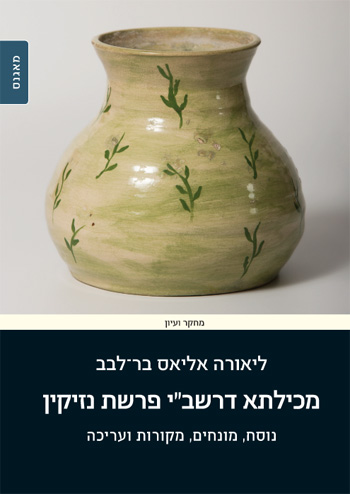
‘מכילתא דרשב”י פרשת נזיקין’

מחר, ה-30 ליוני, יתקיים האירוע השנתי לזכר ד”ר ליאורה אליאס בר-לבב ז”ל בספרייה הלאומית בירושלים. הערב יוקדש לצאת ספרה מכילתא דרשב”י פרשת נזיקין: נוסח, מונחים, מקורות ועריכה, ירושלים 2013. לרגל הארוע אנו מפרסמים כאן ביקורת על הספר מאת אסף רוזן-צבי.

ספר זה הוא עיבוד קל של עבודת הדוקטור של ליאורה אליאס בר-לבב ז”ל שהושלמה לאחר פטירתה. הספר עוסק בעריכתה היצירתית של המכילתא דרשב”י. לצערנו עבודה זו נקטעה ונזקקה בעצמה למעורבות פעילה של עורך לצורך התקנתה לפרסום. זכתה אליאס בר לבב בכך שעבודת עריכה זו תיעשה בידי פרופ’ מנחם כהנא שהוא האדם המתאים ביותר לכך הן מההיבט האישי והן מההיבט המקצועי.

מלבד העיסוק החשוב בשאלת אופי עריכתה של המכילתא דרשב”י והיחס למקבילותיה תרומתו הגדולה של הספר היא בניתוחים הבהירים ובפרשנויות המחודשות הרבות שבו לקטעים שונים מהמכילתא, שלא זכתה, כידוע, לפירושים רבים. ככזה, ספר זה הינו חובה עבור כל מי שעוסק במדרשי התנאים בכלל ובקטעי המכילתא דרשב”י על פרקים כא-כב בספר שמות בפרט. את עיקרי חידושיה סיכם כהנא במילים הבאות (עמ’ יא):

שורה ארוכה של חידושים פרשניים מאירי עיניים בהבנתן המילולית של דרשות המכילתא, בהארת מובנם המדויק של מונחים מדרשיים, בחשיפת הזיקה הספרותית העמוקה של המכילתא למשנה ובייחוד לתוספתא ואף בפיתוח תובנות מתודולוגיות מחודשות על דרכי העריכה של המכילתא דרשב”י בפרשת נזיקין.

וזו מסקנתה של אליאס בר-לבב בנוגע לעריכת המכילתא (עמ’ יג):

המכילתא דרשב”י בחלקים גדולים שלה אינה מדרש מקורי אלא עיבוד, לא תמיד מושכל, של מקורות קודמים לה שעמדו לפניה.

כהנא מסתייג בפתח הדבר מתיאור זה בעיקר ביחס לתיאור הצרימות והחספוסים כעבודת עיבוד ‘לא מושכלת’ והוא מעלה את האפשרות לראות בכך מוסכמות ספרותיות שונות של עריכה.

elias

הפרק הראשון עוסק בנוסח המכילתא דרשב”י ובהצעות חילופיות לנוסח שפורסם במהדורת אפשטיין ומלמד. נוסח מתוקן של המכילתא דרשב”י לדיני נזיקין (שמ’ כא, כח – כב, ה) מופיע כנספח לספר.

הפרק השני סוקר את המונחים המדרשיים של המכילתא דרשב”י והוא עבודה חלוצית ובסיס נתונים חשוב ביותר. במהלך הספר עושה אליאס בר-לבב שימוש רב בהבנה המדוייקת של כל מונח ומונח ומראה כיצד פכים קטנים אלו מהווים בסיס לניתוח הדרשות, הבנת יחסן למקבילות ומגמת עריכתן. כך לדוגמא, הקיצור יוצא הדופן של המונח ‘(אין לי אלא) Y, X מנין?’ או ההיכרות עם המבנה השונה של המונח ‘לרבות X’ בהשוואה למונח ‘לעשות… כיוצא ב-X’ מאפשרים לה לזהות בין הדרשה המקורית לזו המועברת (עמ’ 253-258). בחינה מדוקדקת של מונחי הדיון יכולה היתה לשמש גם בסיס לשאלות הרמנויטיות רחבות יותר. לדאבוננו מעיד כהנא שעיוניה של אליאס בר-לבב בדרכי המדרש ובקנוונציות המדרשיות לא הושלמו ועל כן לא פורסמו בעבודת הדוקטור.

בפרק השלישי, העוסק ביחס למקבילות במשנה ובתוספתא, מראה אליאס בר-לבב באופן משכנע מאוד כיצד דרשות קשות במכילתא דרשב”י מתבארות מתוך השוואה למשנה והתוספתא ולאור הבנת הדרשות כעיבוד (לא תמיד מוצלח, לדעתה) של המקורות הללו. בחלק מהמקרים החספוס נוצר מתוך ניסיון שלא צלח לאחד הלכות שונות ובמקרים אחרים (והמעניינים יותר בהקשר של הבנת הז’אנר המדרשי) מתוך ניסיון לעגן ולקשר את ההלכות למילות הפסוק. בדרך זו נוצרו ‘מדרשים מלאכותיים, לאקוניים מאוד ונטולי בהירות הלכתית’ (עמ’ 239). חידוש חשוב נוסף הוא ההבחנה שדווקא התוספתא, ולא המשנה, היא המקור ההלכתי העיקרי ששימש את עורך המכילתא דרשב”י בציטוטיו. אמנם גם המשנה עומדת ברקע דרשות רבות. בהקשר זה מנתחת אליאס בר-לבב את חטיבת הדרשות הארוכה על נזקי האש (שמות כב, ה) וטוענת שהיא עיבוד מורכב של רצף ההלכות במשנה ב”ק פרק ו.

בפרק הרביעי עוסקת אליאס בר-לבב בדגמים שונים של שכפול דרשות והעברתן. תופעה זו מוכרת בכל מדרשי התנאים ובעיקר בשתי המכילתות על פרשת נזיקין, הן בעקבות הדינים החוזרים על עצמם שבפסוקים והן בעקבות הניסיון ליצור מערכת משפטית אחידה. אליאס בר-לבב טוענת שהתופעה רחבה הרבה יותר במכילתא דרשב”י אולם מהעיון בדוגמאות נראה שהייחוד איננו רק בכמות אלא גם באיכות. תופעה נוספת הנידונה בפרק היא הצמדה ושילוב של מדרשים סותרים היוצרת את הרושם המוטעה שכוונתם זהה.

אביא כעת בקצרה אחת מהדוגמאות שבהן עוסקת אליאס בר-לבב (עמ’ 162-164 בספר) הממחישה באופן משכנע כיצד פתרון הקושי שבדרשה נובע מחשיפת העיבוד של המדרש לאור המקבילה בתוספתא. הפסוק בשמ’ כא, כח עוסק בשור שנגח אדם והרגו, שדינו סקילה – ‘סקול יסקל השור’. על מילים אלו מופיעה במכילתא דרשב”י הדרשה הבאה, עמ’ 178:

אין לי אלא אלו בלבד, מנין לרבות ולדותיהן ועריבתיהן? ת”ל סקל יסקל.
ולא יהא מסקלו מיד אלא כונסו לכיפה עד שעה שימותו
ור’ אלעזר בר’ שמעון אומ’ <<כולהן>> היו נסקלין

בשורה הראשונה מחדש המדרש שני עניינים: א. גם ולדות הבהמה שנולדו לאחר שנידונה ליסקל ולפני סקילתה בפועל – יומתו עמה. ב. אם הבהמה שנידונה ליסקל נתערבבה בבהמות אחרות ולא ניתן לזהותה – כולן יסקלו. בשורה השניה נאמר שכונסים את כל הבהמות (מדובר במקרה שהתערבבו עמה) למקום הסגר עד שימותו בעצמן ובשורה השלישית מובאת דעתו החולקת של ר’ אלעזר בר’ שמעון שבמקרה זה כל הבהמות (שהתערבבו) נסקלות. אליאס בר-לבב מצביעה על שני קשיים מרכזיים בקטע: א. הדרשה הראשונה מתייחסת לשני מקרים (ולדות ונתערבו) ואילו בהמשך מתייחסים רק לדין נתערבו. ב. היחס שבין השורה השניה לבין מה שלפניה ולאחריה – אם כונסן לכיפה עד שימותו הרי שהן אינן נסקלות כלל! אך מהמשפט ‘ולא יהא מסקלו מיד אלא…’ משמע שההמשך מסכים עם דין הסקילה?!

הפתרון שמציעה אליאס בר-לבב הוא לאור המקבילה שבתוספתא ב”ק ה, ה:

נתערבו באחרין ואחרין באחרין – כולן אסורים בהנאה.
מה יעשו להן? כונסין אותן לכיפה עד שעה שימותו.
ר’ אלעזר בי ר’ שמעון אומ’ כולהן נסקלין.

בנוסח התוספתא אין כל קושי – היא עוסקת במקרה של נתערבו בלבד ודעת ת”ק היא שלא סוקלים אותן אלא כונסין לכיפה בלבד. לפי אליאס בר-לבב, העורך ציטט את המחלוקת מילה במילה מהתוספתא והקדים לה את המשפט ‘ולא יהא מסקלו מיד אלא…’ שמטרתו לגשר בין הדרשה הקודמת במכילתא דרשב”י שדין בהמות שנתערבו הוא סקילה לבין דעת ת”ק שבתוספתא שדינן כינוס בכיפה. התוצאה היא ששיטת ת”ק מוצגת כהסתייגות מדין הסקילה שלפניה, בעוד שהיא למעשה דעה חולקת. דומני שהצעתה של אליאס להסבר דרך עבודתו של העורך משכנעת ביותר, גם אם לא ברור האם נכון לכנות עיבוד מעין זה כ’לא  מושכל’.

ניתן היה לסכם את מחקרה של אליאס בר-לבב בהצבעה על המאפיינים הייחודיים של המכילתא דרשב”י בעיבוד החומר התנאי שלפניו ובכך שחלקים גדולים מהמדרש אינם מקוריים אלא פרי של יצירה משנית (עמ’ 337). אולם סיכום מעין זה מעביר את הרושם המוטעה שממחקר המכילתא דרשב”י לא ניתן להסיק למדרשי ההלכה האחרים, ולא היא. אליאס בר-לבב עצמה מציינת כי המכילתא דרשב”י היא מדרש תנאי אותנטי המגלה קרבה גדולה למדרשים האחרים מדבי ר’ עקיבא (ספרא וספרי דברים) כפי שניכר באופן השימוש שלו במונחי הדיון (146-147). במקומות שונים משווה אליאס בר-לבב את התופעות שהיא מזהה במכילתא דרשב”י גם למדרשי הלכה אחרים, אולם אין היא עושה זאת באופן שיטתי. דומני שהשוואה מעין זו תלמד שבמכילתא דרשב”י קיימת הקצנה של תופעות עיבוד שונות הקיימות גם במדרשי ההלכה האחרים. מוקצנותן של התופעות במכילתא דרשב”י מקלה על זיהויין וניתוחן ועל כן מחקר זה ראוי להוות בסיס לבחינה של תופעות אלו גם במדרשים האחרים.

השאלה המרכזית שהעסיקה את אליאס בר-לבב היא זיהוי דרכי העריכה והעיבוד של המכילתא דרשב”י – מנין נוצרו הצרימות במדרש הקדום והמאוחר (המקורי והמעובד) וכן בין המדרש למקבילותיו. כמו כן עסקה בפירוש מחודש לקטעי מדרש קשים לאור חשיפת המקורות והעריכה. אולם עבודתה הפרטנית הרחבה יכולה וראויה לשמש כבסיס לשאלות רחבות נוספות, שאליאס בר-לבב לא זכתה לפתח. ואדגים כאן רק שלושה עניינים כאלו:

א. הרמנויטיקה – ההבחנות הרבות בין דרשות מקוריות לבין עיבודן יכולות לשמש בסיס לשאלות חשובות של קדום ומאוחר בהקשרים פרשניים. כך לדוגמא ניתן לבחון האם קיימים מאפיינים שונים לדרך הלימוד ממילות הפסוק בדרשות המקוריות לעומת דרכי המדרש המשתקפות בדרשות המעובדות.

ב. היחס שבין מדרש ומשנה – אליאס בר-לבב מראה כיצד המכילתא לוקחת הלכות העומדות לפניה ומעבדת אותן לדרשות באמצעות עיגונן במילות הפסוק. תופעה זו, שיש לבחון אותה גם במדרשים אחרים (ונראה שיימצאו בכך הבדלים בין דבי ר”י ודבי ר”ע), יכולה להיות קיימת כבר ברובד הקדום של המדרש ויש בה חשיבות גדולה להבנת הפרוייקט המדרשי כולו והיחס שבין המדרש וה’משנה’.

ג. המדרש המקורי והשוואה לדבי ר’ ישמעאל – לאחר הזיהוי של דרשות רבות כעיבוד של מקורות תנאיים מקבילים ניתן לשאול מה הם החומרים המדרשיים המקוריים שעמדו בפני עורך המכילתא דרשב”י. שאלה זו מעניינת במיוחד לצורך השוואה בין חומר מדרשי קדום זה לבין המדרש המקביל מדבי ר’ ישמעאל. שאלה נוספת היא עד כמה ניתן למצוא דמיון או מחלוקת בין שני בתי המדרש לא רק ביחס לחומר הדרשני וההלכתי אלא גם ביחס לדרכי העיבוד והעריכה שלהם.

לסיום מילה על ההיבט האישי שמאחורי ספר זה. לצערי הרב לא זכיתי להכיר את ליאורה, אך יצא לי לשמוע את שבחה ממכרים משותפים שונים. כעת יכול הקורא להתוודע למעט מדמותה בפתח הדבר המרגש שכתב פרופ’ כהנא שהיה בקשר קרוב עמה במשך שנים, הנחה אותה בעבודתה ואף ערך את הספר לדפוס. מתוך העיון בתוכנו של הספר ניכרים דבריו על הכוח הפרשני, הברק האינטלקטואלי והיצירתיות יוצאת הדופן של ליאורה ועל כן חזקה שאין גוזמה גם בתיאורו את אישיותה המופלאה והאצילית.

סוף דבר, ספר זה גדוש בחידושים הן ביחס לקריאה ופרשנות של דרשות המכילתא והן ביחס להבנת דרכי העיבוד והעריכה של מדרשי התנאים. אמנם העיון הפרטני בסוגיות הלכתיות סבוכות בהלכות נזיקין אינו קל לקריאה למי שאינו מצוי בעולם זה, אך הניסוח הבהיר והקולח מצליח להקל את עמל הלימוד במידת האפשר. צער גדול הוא שהמחברת לא זכתה להשלים את מחקרה אולם דומני שגם חוסר שלמות זה מעורר את הקורא להמשיך ולהפך בעניינים החשובים הנידונים בו.

אסף רוזן-צבי הוא דוקטורנט בחוג לתלמוד והלכה באוניברסיטה העברית. עבודת הדוקטור שלו, בהנחייתו של פרופ’ מנחם כהנא, היא על מסכתא דכספא שבמכילתא דר’ ישמעאל והיא עוסקת בין השאר בשאלות של פרשנות, עריכה והרמנויטיקה מדרשית.

Standard
Announcements, English

The Talmud Blog- Now in Hebrew!

In case you haven’t noticed, the Talmud Blog has undergone some changes over the last couple of weeks. We’ve updated our look, reorganized things a bit, and prepared the site for Hebrew posts.

Like all virtual artifacts, the blog is ‘located’ in The Cloud. But most of the humans who work on the blog are based in Jerusalem. We also have a considerable readership in Israel, even if most of our audience lives in the United States. So the time has come, as we enter our fourth year of collective web-logging, to post in Hebrew as well. You will be able to access these on the top right tab “פוסטים בעברית“. Yakov Z. Mayer, a doctoral student at Tel-Aviv University, will be editing our Hebrew content.

That said, given the internationalism we aspire to, the main language will remain English, which like it or not has overtaken Latin as the language of science and letters. We should add that potential submissions in Hebrew, English are very much welcome. 

Standard
English, Events

How Open is ‘Open’?

For those of you who couldn’t make it to last night’s event– we’re sorry, but we unfortunately failed to to take Germany-USA into account when reserving the space a few weeks back. I would like to summarize some of the topics and projects that were discussed for the benefit of the larger Talmud Blog community and also to help developers and digital humanists at large understand the problems facing talmudists.

After an extremely helpful introduction on what the term “open” means by the apostle of digital humanities in the Holy Land, Sinai Rusinek, yours truly attempted to briefly summarize the main stages of rabbinic text curatorship and which websites talmudists use while performing such “manuscript work.” One of the issues I raised is the simple inconvenience of having to keep track of what is out there: the internet is a big place, and the number of websites containing either images or transcriptions of manuscripts is constantly growing. Between the National Library’s online catalog, which links to every available online image of Hebrew manuscripts, and The Talmud Blog‘s “Toolbox,” one can get to all of these different resources, but it is unfortunate that there is not more of an attempt to centralize all of these different projects under one roof.

The conversation quickly turned to the question of what questions we can ask using our computers, and three different subfields quickly emerged. The first two dealt with working with manuscripts:

A) How can we use computers to help us edit rabbinic texts? This question was addressed via two parallel projects, one led by Hayim Lapin and another by Daniel Stoekl ben Ezra, both of whom began editing the text of the Mishnah ahead of English and French translations and are now working together. Different issues that arose under this topic were how to crowd-source such relatively mundane tasks as transcribing manuscripts and tagging lemma, using Hebrew in TEI, and to what extent should scholars make their synopsi or databases of manuscripts available to the public. For example, many of the transcriptions currently available online are presented as PDFs, but others may want to access them in different formats so that they can more easily (and legally, where those issues arise) use them in making their own editions or to ask other questions of the text.

File:Karl Lachmann - Imagines philologorum.jpg

Karl Lachmann (1793-1851)

B) Can computers help us ask questions with regards to what one participant termed “fundamental issues of how the Bavli was formed and transmitted?” Time and again, and especially now that the Cairo Genizah corpus is more readily available, a certain brand of philological work of the Bavli has problematized the notion that we can use Lachmannian stemmatics to try and understand the relationship between manuscripts. How can we use computers simply to keep track, quantify, and characterize the various differences between talmudic manuscripts? As mentioned, these questions pertain not just to how to “edit” the talmudic text- what the text can be- but also to the very question of what the talmudic text is.

C) Manuscripts aside, what other questions can we ask of rabbinic texts using computers? The questions that came up for the most part dealt with the Bavli, harkening back to some issues discussed here on the blog. Itay Marienberg-Milikwosky of Ben Gurion University’s Department of Hebrew Literature described some of the projects he has started working on in a Franco Moretti inspired lab for digital humanities at Ben Gurion. One of the projects he is working on is trying to restructure how we think of the sugya. Given that the term itself is somewhat foreign to the Bavli and is largely a construct of later interpreters, Itay has been using word-frequency statistics and other quantitative computations to map the Bavli differently, taking special note of how- and perhaps even why- the Bavli repeats itself (“חזרתיות” in his words). You can be assured that Shai and I will be pressuring Itay to guest-post on his findings.

Additional themes that arose related to the relationship between the academic talmudist and the programming or non-academic other. In terms of the latter, how much can projects such as Sefaria (presented by Ephraim Damboritz) and Sefer haAggadah (presented by Amit Assis) benefit from academic talmud? In terms of the former- how and where should talmudists be working with programmers? On the one hand, some talmudist participants were adamant about not studying programming and insisting on working alongside programmers instead. At the other end of the spectrum were those eager to create programming boot camps for talmudists and other humanities scholars. In between were the newbies who got lost after the ‘m’ of XML. Either way, it was clear that talk of “open resources” brings together scholars who are themselves rather open to new ways of thinking about their research.

Next Steps

I would like to see a couple of things come from this evening. First of all, it is clear that a growing number of talmudists are excited by the possibilities that digital humanities opens open up before them, and that many of them already have some idea of how they would like to use moderately sophisticated programs in their own research. I think it would be great if we could use The Talmud Blog– perhaps in the comments section here, through guest posts and maybe even by adding a forum- to create some kind of clearing space for ideas and projects.  Such a space is needed to connect people who may have similar projects in mind, to generate discussions about what we can do with digital humanities, and to address the more philosophical questions of how humanities scholarship is changing before our eyes in this digital age. Let us know what you think!

Standard