English, Events

The Talmud Blog Live- Ron on “The Torah as the Divine Logos in Tannaitic Literature”

After over a year and a half of blogging, last night, for the first time ever, all of the Talmud Blog’s editors and contributors were actually in the same place at the same time. And what better reason could there have been for such a gathering than to attend, along with a diverse crowd of Talmud Blog followers, a presentation by Dr. Ron Naiweld on “The Torah as the Divine Logos in Tannaitic Literature”.

It is our pleasure to present to you the audio of the lecture here. Enjoy, and feel free to offer your comments below.

This slideshow requires JavaScript.

Standard
English, Talk of the Town

Coverup: Two Examples of Censorship, Then and Now

Censorship, which is supposed to conceal, has the habit of doing just the opposite: To censor is to cover up, and covering up is conspicuous. Here are two cases in point that I recently stumbled upon:

(1) I’ve been lucky enough to spend a few early mornings a week studying at Havruta, a unique Beit Midrash located on Hebrew University’s Mount Scopus campus. A few days ago a student came over and pointed to a strange formulation at bPes 113a:

שבעה מנודין לשמים ואלו הן: יהודי שאין לא אשה, ושיש לא אשה ואין לא בנים, ומי שיש לא בנים ואין מגדלין לתלמוד תורה ומי שאין לא תפילין בראשו ותפילין בזרועו וציצית בבגדו ומזוזה בפתחו והמונע מנעלים מרגליו וי’א אף מי שאין מיסב בחבורה של מצוה

According to this passage, which is reproduced above from the Vilna edition, the first in the list of people divinely excommunicated is ‘a Jew who does not have a wife’. Since it is more than clear that the Talmud’s target audience is made up of (rabbinic) Jews, the emphasis on the lifelong bachelor’s Jewish identity is strange. Note also that this marker does not appear in the rest of the passage, which goes on to list the other offenders without noting their religious persuasion. A look at the manuscripts reveals that none record the reading “a Jew”, and even early prints omit it as well. Dikdukei Sofrim points out that the first printed edition that contains this ’emendation’ is the Basil ed. and that it reflects an act of censorship.

Some scholars might say that this reading has no real philological value, but surely it is still useful for understanding the habits of early modern censors. In this case, the change is more than the usual fare. It does not respond to an unflattering portrayal of Christians or Jesus. Rather, it reveals someone troubled by the Talmud’s internal discourse. Here, the very assertion that not getting married is grounds for divine excommunication is seen as a threat to Christianity. Clearly, the passage negates the view that the celibate life is the good life, yet I doubt that it was directed at Christians. By adding the word “a Jew”, the censor attempts to limit the scope of the talmudic statement to the Jewish community, and the lady doth protest too much, methinks.

In his Demonstrations, the fourth century church father Aphrahat felt the need to respond to Jewish views about virginity that irked some Christians (His second, carefully argued demonstration on the topic is worth reading in full, and should be compared with early Jewish biblical traditions, as Naomi Koltun-Fromm has recently done). Apparently, what Jews said about celibacy bothered at least one censor, over a millennium later. And the evidence remains in a variant in the classic, Vilna edition.

(2) On a dark, misty, and rainy day the other week, I participated in what could only be described as a Gothic tour of Beit She’arim together with my home institute. Beit She’arim was the place to be buried in ‘early’ late antiquity, whether you were of rabbinical or non-rabbinical bent, a Jew who heartily embraced figural art, or one who was less than enthusiastic about it. On the way out of the site, I came across a sign whose top, Hebrew half had been skillfully covered by a shiny, screwed-in piece of plastic:

beitshearim censorship

One can still easily read the English text, which nicely highlights the mixing of Jewish and pagan themes in the funerary art. The fact that the English text remained undisturbed means that the censor, whoever he is, was only concerned with the ‘purity’ of (mono-lingual) Hebrew speakers. It was a cold day to begin with, but seeing this act of censorship, not in premodern Basil, but here in contemporary Israel, was chilling. Unlike Ophir’s example of ad-hoc censorship described in an earlier post, at Beit She’arim the censor’s perfectly cut, shiny piece of plastic screwed into an official sign had a certain authoritative feel. Apparently, someone at the parks authority permitted the censor to commit his sorry act. But what exactly the censorship reveals about the place of critical observations at Israeli historical sites – or lack thereof – I cannot know…

Standard
English, Events

The Talmud Blog Live: Dr. Ron Naiweld on “The Torah as the Divine Logos in Tannaitic Literature”

We are excited to announce the Talmud Blog’s third “live” event, which will take place next Tuesday, December 25th, 7:30 PM at Ohel Moshe 5, Jerusalem. We’ll be hosting our very own Dr. Ron Naiweld, a contributor to the blog. Ron will be speaking (in Hebrew) on “Beyond the Letter and the Spirit: The Torah as the Divine Logos in Tannaitic Literature”. More information on his talk, including an abstract, can be found on the event’s Facebook page.

Reader’s interested in attending are invited to RSVP either by emailing us (thetalmudblog [at] gmail [dot] com) or, preferably, via the event page.

Standard
English, Piyut

A Payytanic Quiz for Hanukkah – “The Answers”

Hanukkah is almost over and it is time to publish the “answers” to the quiz. I put answers in quotation marks since it is not always clear what the payytan meant or was referring to, but this is the case, I would argue, with almost every text.

Before proceeding I would like to thank those of you who responded to the quiz and brought up many interesting (and “correct”) answers. Special thank goes to those who commented that there are indeed more halakhic piyyutim than one would have assumed from my brief introduction. Most significantly are the Az’harot (=warnings) piyyutim for Shavuoth, as Shamma Boyarin pointed out on our Facebook page.

Below are some short comments concerning each stanza of the piyyut; the comments are taken from my forthcoming critical edition of the piyyutim of the Qiliri for Hanukkah and from the critical edition of the piyyutim of Pinhas Hacohen by Shulamit Elizur.

Stanza 1: This was a tricky one; the prohibition to use the Hanukkah candles is well known and attested in Masekhet Sofrim (20:4). What is less known is that in the same chapter we find the following regulation:

.כיצד מברכין? ביום הראשון המדליק מברך שלוש, והרואה שתים

How does one bless? On the first day the one who lights says three blessings, and the one who sees [the candles] says two.

So what we have here is not a reference to the Havdalah or the Hallel blessings as some suggested.

Stanza 2: The reference here is to the prohibition to move the candles once they were lit.

Stanza 3: A clear reference to “נר איש וביתו” from Bavli, Shabbat 21b.

Stanza 4: Here we do have a reference to the Havdalah and the prohibition of using the Hanukkah candle for that purpose. Medieval sages quote the Yerushalmi to back up this ruling, although it is absent from the version that we now have.

Stanza 5: Here we find a direct allusion to the prohibition to use the light of the candle. The reference to spinning might relate to the following saying from Yerushalmi, Berakhot 8:6:

אין מברכין על הנר עד שיאותו לאורו, רב יהודה בשם שמואל, כדי שיהו נשים טוות לאורו

It is forbidden to bless over the candle until its light is sufficient; Rav Yehuda in the name of Shmuel: when women could spin in its light.

Stanza 6: A reference to Bavli, Shabbat 21b: “והמהדרין נר לכל אחד ואחד”.

Stanza 7: “מעש” refers here clearly to the famous story (“מעשה”) about בית שמאי ובית הלל in Bavli, Shabbat 21b.

Stanza 8: One reader noted the similarity to the talmudic phrase concerning the candle of Havdalah “אין מברכין על הנר עד שיאותו לאורו” (quoted above). Indeed, it is attested in our context in Masekhet Sofrim: “ואם הדליקו ביום, אין ניאותין ממנו… שכך אמרו אין מברכין על הנר עד שיאותו לאורו”.

Stanza 9: Again, according to Masekhet Sofrim one should wait until the wick will be entirely consumed and, in addition, it is forbidden to use an old one.

Stanza 10: Here the prohibition to light one candle from the other is hinted; as it is appears in Bavli, Shabbat 22a: “רב אמר, אין מדליקין מנר לנר”.

Stanza 11: Nothing halakhic here but the reference to the candles of redemption brings to mind one of my Hanukkah posts from last year.

Next year, God willing, we will have another Hanukkah quiz, this time with a genuine piyyut by Pinhas Hacohen. See you then!

Standard
English, Piyut

A Payytanic Quiz for Hanukkah

Hebrew liturgical poems (piyyutim) only rarely relate to halakhic matters. However, we do have one intriguing piyyut for Hanukkah that enumerates laws concerning the candle lighting during the days of the feast. This piyyut is attributed in Genizah manuscripts to the celebrated poet El’azar Birabi Qilir, who lived in the Galilee in the early seventh century, although it appears as well in a composition by the mid-eight century poet, Pinhas Hakohen from Kifra (a suburb of Tiberias). At any rate, we thought that this piyyut would give us an opportunity to hold our first ever Talmud Blog Quiz. Readers are encouraged to decipher the poem: Namely, to explain which laws it alludes to and cite texts that support their answers in the comments section of the blog. When the last day of Hannukah arrives we will post the “correct” answers and respond to your suggestions.

Have fun!

hanquiz

Standard
English, Readings

The Mishnah and Second Temple Polemics: A Note on Tractate Hallah

The past few years have seen an abundance of new Mishnah scholarship. Between the literary turn exemplified by Avraham Walfish’s dissertation; the CoverBakhtin moment in Moshe Simon-Shoshan’s monograph; and the ritual and Temple focus of the work of Berkowitz, Stoekl Ben-Ezra, Rosen-Zvi, and, most recently, Naftali Cohn, the Mishnah remains at the nexus of exciting academic output where new questions, methodologies, and insights come to test.

In this context, Yair Furstenberg, whose dissertation on Tractate Taharot can be included in the above list, delivered a class on Mishnah Pesahim here in the HUJI Talmud department last semester. At the end of the course, I, along with a friend, penned a paper on Mishnah Hallah. Studying and writing on this short tractate raised some methodological issues that I have been pondering for quite some time and would like to share here.

To what extent can we read polemics into the Mishnah? To be sure, there is no question that the Mishnah engages in some sort of polemics. At times, it claims to record the opinions of what we now term Second Temple sects, going so far as to even bring relatively complex arguments against them. As has been shown, some of these rejected opinions recorded in the Mishnah parallel those found in actual Second Temple literature. One the face of it, tractate Hallah itself doesn’t seem to record any sectarian opinion that differs from that of the Rabbis, but such a view might be found elsewhere in rabbinic literature. Indeed, hints of polemics are found in section 110 of the Sifre Bamidbar. On the verse “מֵרֵאשִׁית עֲרִסֹתֵיכֶם תִּתְּנוּ לַיקֹוָק תְּרוּמָה לְדֹרֹתֵיכֶם” (Numbers 15:21), the Midrash states (Horovitz pg. 114, Kahana lines 34-37):

מראש’ עריסת’- למה נא’. לפי שהוא או’ ראשית עריס’, שומע אני את הראשונה שבעיסות. ת”ל מראשית עריס’. מראש’

As noted by Menahem Kahana in his dissertation (“Prolegomena to a New Edition of the Sifre on Numbers”, Jerusalem, 1982), it appears that the Midrash here is rejecting an opinion that identifies Hallah with the commandments of Bikkurim and Omer. Such an opinion would understand the word “ראשית” as it appears in other parts of the Torah in relation to first fruits, practically meaning here that Hallah should be separated only once at the beginning of the year and not from each batch of dough.

Unbeknownst to Kahana, this deferred opinion indeed was a sectarian one, as became clear in a section of The Damascus Document published years after he finished his dissertation. The CD states (according to Shemesh’s reconstruction):

על] חלות התרומה לכל בתי ישראל אוכלי לחם
[הארץ ל]הרים אחת בשנה עשרון אחד תהיה האחת
[ לפני] השלמו לישראל אל [י]רים איש

and Baumgarten comments: “Our text identifies this חלה with the two loaves (לחם תנופה שתים) to be offered on the Festival of Weeks in accordance with Lev 23:17… The text interprets this to refer to an annual terumah, presumably on the basis of the term ראשית (Num 15:20), which is elsewhere applied to first fruits…”.

Non-polemical Hallah

In our paper, we attempted to use this argument as a backdrop for better understanding some of the rather odd structural phenomena of tractate Hallah. In its first chapter, for example, the Mishnah devotes a relatively large amount of time to the comparison between Hallah, Terumah and Ma’aser. Likewise, in the third chapter, the discussion of Hallah is interrupted in Mishnahs 4 and 9 by comparisons to these tithes. By developing the tractate thusly, the editor succeeds in introducing the basic laws of Hallah while at the same time firmly placing the commandment outside of the category of “first fruits”. The method is subterfugal: The Mishnah doesn’t even mention the sectarian opinion as an option. Instead, it emphasizes the aspects of Hallah that are unlike Bikkurim and more like Terumah and Ma’aser: That the requirement to separate it is not a function of time per se, but of the produce or dough’s entering into a state of obligation through its physical state.

But are we overreading here? Can polemics be found here even though they aren’t brought up explicitly? Can the structural choices of the Mishnah’s editor(s) speak of points of conflict between the rabbis and other Jews? I’m not sure if the Mishnah works this way, and I’m wondering what other people have to say.

Standard
English, Reviews

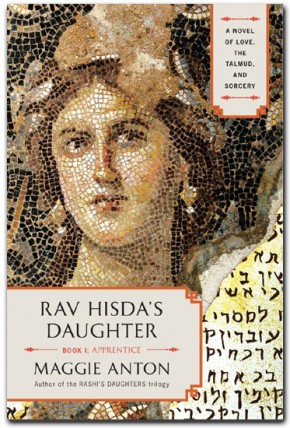
Review: Maggie Anton’s Rav Hisda’s Daughter- Guest Post by Ilana Kurshan

At our Talmud Blog-Jerusalem event, we described some of the ways that the TB community can participate in the larger conversation that we hope to foster here. At the top of the list is writing posts for the blog. And so we are happy to present a short review written by Ilana Kurshan, a friend, devoted reader of the blog, and member of the Talmud Blog community, about Maggie Anton‘s latest novel, Rav Hisda’s Daughter. The review was published in Lilith Magazine (Fall 2012; 37.3) and is cross-posted from Ilana’s blog.

Towards the end of Rav Hisda’s Daughter (Plume, $16), Maggie Anton’s eponymous heroine returns to her home in Babylon after four long years in the land of Israel and is greeted by her father with the words, “Blessed are You, Adonai…. Who revives the dead.” Anton has made quite a career out of reviving the dead, first with her trilogy of novels bringing to life Rashi’s three daughters, and now with her imaginative tale of the daughter of the third-century Talmudic sage Rav Hisda.

The novel’s opening scene is closely based on the Talmudic story in which Rav Hisda’s young daughter sits on her father’s lap while his two leading students stand before him. Rav Hisda asks his daughter which one of them she would like to marry, and she greedily responds, “both of them.” One of the students—arguably the more quick-witted—immediately pipes up, “I’ll go second!” This story sets the stage for Anton’s tale, in which Hisdadukh—Anton invents her name, which is Persian for “Daughter of Hisda”—is betrothed first to Rami bar Chama, the love of her youth and the father of her two children. Following Rami’s tragic and sudden death after just five years of marriage, Hisda is betrothed to the other student, the harsh and hardened Rava. The novel follows Hisdadukh not just from one husband to another, but also from her home in the Babylonia, where she is one of two daughters and seven sons in an illustrious rabbinic family, to the Galilee, where she mingles with amulet scribes, early Christians, and the great scholars of Tiberias, Caesaria, and Sepphoris. It is in Sepphoris that Anton imagines that Hisdadukh serves as the model for the iconic “Mona Lisa of Galilee,” a floor mosaic that remains a popular archeological attraction in Israel today.

Many of the conversations and characters in this novel are lifted straight of the pages of the Talmud. But as the Talmud is not a work of history—Anton may be the first to call it “historical fiction”—even these elements of the novel may raise eyebrows: “Everyone knew that the Evil Eye was responsible for a great deal of misery in the world. Rav, Father’s teacher, once went to a cemetery and cast a spell that let him talk to the dead. Ninety-nine told him they’d died from the Evil Eye and only one from bad air.” We must be as skeptical of the historicity of Anton’s account as we are of the Talmud’s narration of this incident in tractate Bava Metzia. And so in terms of authenticity, perhaps Rav Hisda’s Daughter has an advantage over Rashi’s Daughters, since there is no pretense that the former is based on historical sources. When Anton succeeds best, she brings Talmudic debates to life by showing the very human personalities and passions behind the various legal positions. And so when Rami and Rava debate the laws of inheritance, Anton suggests that they are in fact really fighting over Hisdadukh; thus their battle of wits is also a sort of romantic duel.

Anton’s novel is rooted not just in the soil of the Talmudic text but also in the field of academic Talmud study today, which is apparent even without glancing at her impressive bibliography or the list of illustrious international scholars she acknowledges. Hisdadukh is a student of Torah arguably modeled on her Palestinian counterpart Beruria, but she is also an enchantress who makes magical incantation bowls of the sort discovered by archeologists in the area that is now Iraq and Iran. The discussions that come alive in this book are Talmudic as well as academic, which may explain why this novel will have so much appeal for readers like myself who are steeped in the Talmudic text and the scholarship about its context. For readers who do not experience the pleasure of the familiar in its fictionalized form, Anton’s novel celebrates our rich and colorful textual heritage and reminds us that feminist history is often a return to the material and the real – to the beer the scholars drank, the springs in which they bathed, the cycle of blood that dictated their most intimate relationships, and the rooms in which they studied texts that occasionally refer to wives and daughters whose lives we can at best imagine.

Standard
English, Events

The Talmud Blog Hosts Michal Bar Asher-Siegal

In a beautifully appointed Jerusalem home, and framed by some Avigdor Arikha, Michal Bar Asher-Siegal led an extremely animated discussion that compared many of the motifs comprising the Bavli’s Resh Lakish story cycle with similar elements from Syriac Christian hagiographical texts. Like those cool guys from Chicago, Michal was on a mission to convince scholars of the significance and necessity of reading the Talmud alongside these (then) very popular Christian works.  And in our humble opinion, she succeeded marvelously. For those of you who want to see if you’re convinced, we’ve uploaded the audio of the lecture here, and the handout here.  Let us know what you think!

Standard
English, Events

The Talmud Blog Hosts Zvi Septimus

It’s 10:00pm in New York, and, like many others, I’m watching the debate. But there’s one thing that I can’t stop thinking about, and that’s the lecture that I just heard at Drisha by Zvi Septimus, “Was Resh Lakish a Hedonist or an Ascetic? How The Bavli Conveys Meaning”.

For all of those who couldn’t make it, the audio of the lecture is available here, and here’s the audio of the questions and answers (some may want to listen to them before the lecture itself). The sourcesheet is available here. And for those in Jerusalem next week, make sure to come hear Michal Bar-Asher Siegal speak about “The Babylonian Talmud and Christian literature: Resh Lakish and the Monastic Repentant Robber“!

This slideshow requires JavaScript.

Standard
Book Club, English, Ruminations

W(h)ither Rabbinics

As contemporary academics, many of us are both cursed and  blessed with a chronic condition of acute-hyper-self-awareness. We cannot simply do what it is that we do. We must question, prod, examine, and analyze our vocation and ourselves to death. A pair of recent articles published by two prominent Talmudists aid us in this sorry task. Both take on the state of Rabbinics, and interestingly enough arrive at different destinations.  The first essay, by David Stern, “Rabbinics and Jewish Identity: An American Perspective,” appears in the just released Ben Gurion University volume, Jewish Thought and Jewish Belief (ed. Daniel J. Lasker), which is based on a 2010 conference held at BGU (the audio of Stern’s lecture is available here). The second, by Ishay Rosen-Zvi “לחלן את התלמוד” (‘Secularizing the Talmud’) appears in Teuda 23 (2012). We’d like to invite our readers to read these essays, and in the coming days weigh in on the important issues they raise. To get us going we are happy to present a rather provocative reaction by Michael Satlow, who has just joined the Talmud blog as a contributor. Enjoy the essays, read Satlow’s reflections, digest, and then join us in a spirited conversation in the comments section below!
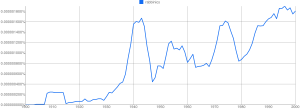
Going…Going…Where? “Rabbinics” according to Google’s ngram

Rabbinics Must Die

In our line of work, the word “rabbinics” hardly raises an eyebrow; it is, after all, what we “do.”  When pressed by our colleagues for a quick word or phrase to describe what we do, many of us (and I include myself here) frequently say that we are “in rabbinics.”  The term has long nagged me.  Recently, though, having read two excellent and complementary essays by our esteemed colleagues David Stern and Ishay Rosen-Zvi on Shai and Yitz’s recommendation, I have finally been able to articulate why I am so uncomfortable with the term.

Stern’s essay is a personal reflection on the trajectory of “rabbinics” that nevertheless advances a strong explanatory argument.  Contrary to all reasonable expectations, the study of rabbinics in America has flourished, both within Jewish studies and more widely throughout the academy.  There are several reasons for this, Stern argues, but the primary one is the distinctive way in which American colleges and universities organize knowledge.  Rabbinics, Stern writes, “has been decisively, fundamentally, shaped  by currents in the American academy and its peculiarly inter-disciplinary – or post-disciplinary – fluidity” (19).  At the same time, this fluidity has brought a wider academic audience to rabbinic literature.

Rosen-Zvi’s essay also focuses on the relationship between the study of rabbinic literature (מחקר התלמוד, which I take to be functionally equivalent to rabbinics) and its wider context, but this time in the Israeli academy.  Rosen-Zvi is most concerned with the blurry line between the “secular” and non-secular study of rabbinic literature.  While on the one hand he appropriately recognizes that the study of this literature, like everything else, can never be entirely “pure” and disinterested, he also calls on his colleagues to remain conscious of the values – if not religious, then cultural, apologetic, or national – that they bring to their scholarship.  The purpose of this awareness, it would seem (although Rosen-Zvi does not explicitly say this), is to make the study of this literature more “secular” or “normal.”

Stern and Rosen-Zvi appear to agree that the application of modern, secular academic approaches to rabbinic literature is intellectually productive and worthwhile; that rabbinic literature has much to contribute to the wider academy; and that there is a (perhaps decreasing) difference between how American and Israeli academics study this literature that is based on both wider cultural issues and the organization of the academies themselves.  While I disagree with a point here and there in these essays, I am fully on board with their larger appraisals.

These essays are more descriptive than prescriptive, but they raise the question of how we might continue to further the flourishing of “rabbinics” within the academy, both in Israel and America.  One thing that I believe we can do to accomplish this is, paradoxically, to kill “rabbinics,” a category that Stern and Rosen-Zvi largely take for granted.

The fundamental problem is that “rabbinics” implies both a body of literature and a distinctive methodology or approach to that literature.  In some quarters in Israel this perhaps accurately describes, for good or bad, how rabbinic literature is studied (e.g., philologically in a “department” of Talmud).  In the American academy, however, “rabbinics” is not a discipline.  Those of us who primarily use rabbinic literature are situated in departments of religious studies (most frequently), language and culture, and history.  We are scholars trained in a particular discipline who use rabbinic texts for our data.  I do not “do rabbinics.”  I “do” Jewish history in antiquity, using rabbinic texts as one (even if it is the primary) set of sources.

This might seem like the kind of inconsequential terminological squabble in which scholars regularly engage, but I think that there really is something at stake.  To assert, even in a lazy and casual way, that there is a distinct area of study called “rabbinics” works against our desire to normalize rabbinic texts and their study within the academy.  When a colleague says that I work in “rabbinics” they are also implicitly asserting that I do not primarily work in “late antique religions” or history.  Despite the many successes rightly held up by Stern, the study of rabbinic literature and its authors remains fairly tightly circumscribed within the academy:  few scholars who specialize in rabbinic writings, for example, can be found in comparative literature or philosophy departments, although both disciplines can profitably be applied to them.  To see oneself, and to be seen, as a scholar of literature who specializes in rabbinic texts presents a different profile than as one who does rabbinics.

Here we might draw a lesson from our colleagues who used to be in the field called “patristics.”  Over the last few decades, the scholars in this field have themselves largely killed it, transforming it into the study of “late antiquity.”  They find themselves as scholars of religious studies, history, and classics (an academic division with its own complicated problems).  They have largely left it to the theologians to preserve the traditional modes of reading the Church fathers.  I think that most would consider this terminological and conceptual transformation to have been largely successful; it has both enlarged their own conception of their academic field and has helped them to grow within the context of the American academy.   I think that we have something to learn from their experience.

I am not arguing that those of us who apply different disciplinary frameworks to rabbinic literature have nothing in common and cannot learn from each other, only that the supercategory “rabbinics” obscures boundaries that ultimately are useful to us.  As Stern emphasizes, the American academy allows and at times encourages academic work across traditional disciplinary boundaries.  (I will leave it to my Israeli colleagues to comment on how this plays out in their context.)  Just as there is an organization that facilitates discussions among those who utilize Shakespeare in different disciplinary frameworks, so too we should continue to facilitate interdisciplinary discussions among those who deal with rabbinic literature.  And just as the North American Patristics Society brings together secular and religious academics, so too frameworks exist to enable this kind of discussion among those who work on rabbinic literature.  Let’s just, as Rosen-Zvi urges, be clear about what we are doing.

“Rabbinics” has led a long and productive life.  It is now time, however, for it to pass the way of patristics.

Standard