English, Recent Publications

Boyarin’s Intertextuality Now Available in Hebrew

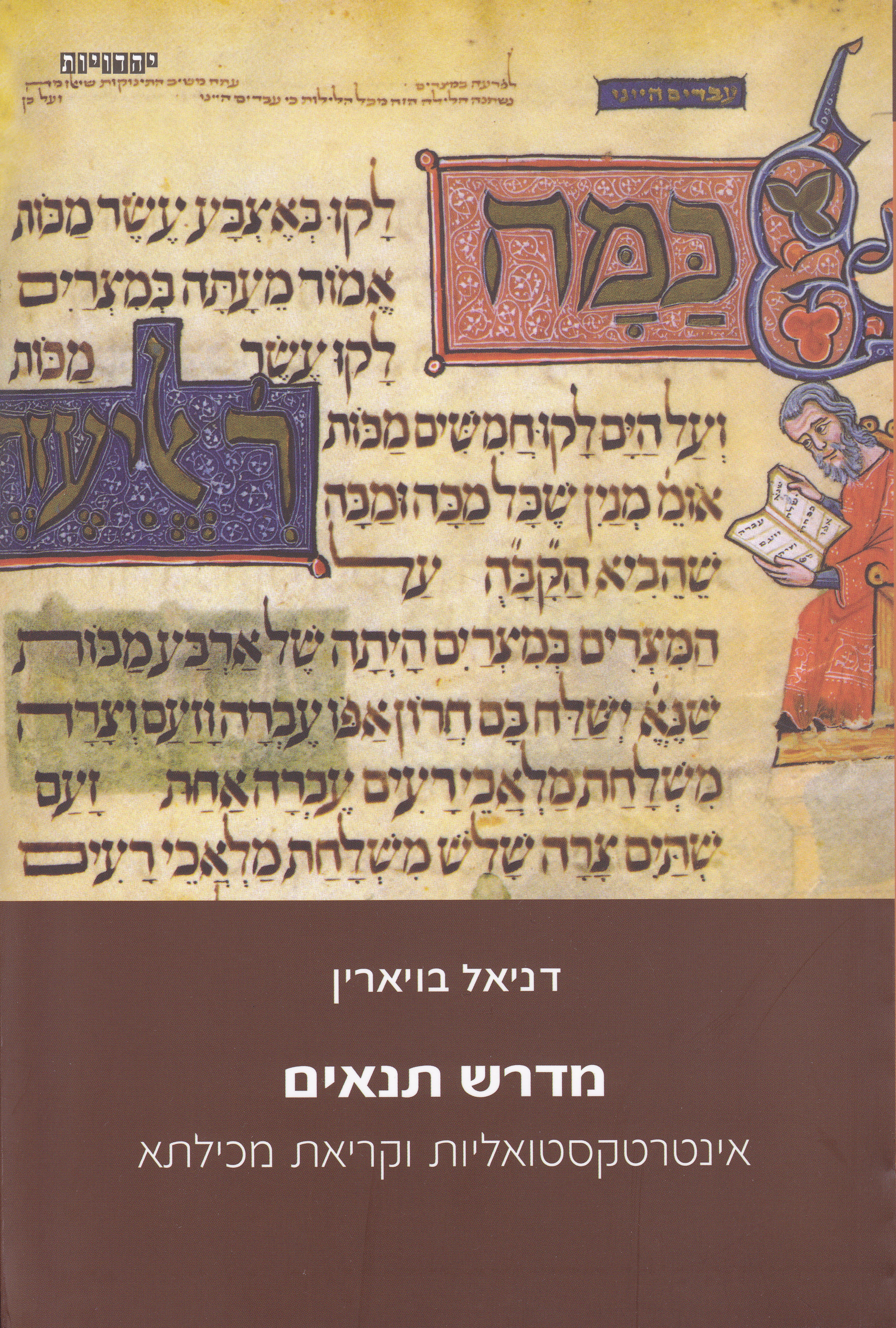
Last spring, future Talmud blog contributors and other Jerusalemite students of Rabbinic literature were lucky enough to spend a delightful evening with Prof. Daniel Boyarin, discussing Carnal Israel from the hindsight of twenty years. Prof. Boyarin had scheduled his trip to Israel for the release of a translation of his earlier work, Intertextuality and the Reading of Midrash in Hebrew. Little did we know that only a few months later some of us would be collaborating on a web log. Nor did we fully understand how long we would have to wait for the release of Midrash Tanaim: Intertextualiut viKriyat Mechilta (Hartman, Alma, and Keter 2011).

Truth be told, now that the volume is in my hands, the time spent on its preparation (and its strange recall by the publisher after its initial release…) seems to have been well spent. I only purchased it a few hours ago but I’ve already started plowing through the two new chapters Prof. Boyarin wrote for the Hebrew edition: “Midrash as Anti-Philosophy” and “Rhetoric, Theology and Allegory in Paul and Origen”. Both seem to offer authoritative summaries of some of Boyarin’s scholarship since Intertextuality‘s English release in 1990. Another chapter by Ishay Rosen-Zvi provides an overview of the affect that Boyarin has had on research into Rabbinic literature- “What is Left to Interpret? Thoughts on Boyarin and his Footsteps”. These chapters add significant value to the book, but its main contribution is no doubt the way it makes Boyarin’s scholarship accessible to the Israeli reader. Boyarin has still left plenty of writings to translate, and I hope that we’ll soon see translations of other works of his as well. You can hear Boyarin and other scholars (Menahem Kahana, Galit Hasan-Rokem, Joshua Levinson, and Dina Stein) discuss the book at the Shalom Hartman Institute on November 27 at 8:30pm.

Talmud Bloggers and Boyarin (far right with the wine glass), Spring 2011

Standard
English, Talk of the Town

Back to School Shenanigans

With the month of November only a couple of days away, the MLB off-season over with a bang, and the first signs of snow falling in the Northeast, the school year here in Israel is just about ready to start. Here in Jerusalem, Hebrew U students will have new opportunities to study with Talmud Blog contributors and friends as The Department expands its teaching base and Rabbinics continues to find more homes in the university.

Last week, a few die-hard Talmudists got together to kick off the school year with a pre-yarhei kallah style gathering at the Nachlaot abode of one blogger/student. Books were discussed, cookies were nibbled, and summer experiences were shared until another blogger/student (granted, much more advanced at both), Pinchas Roth, stepped up to deliver a brief talk. Pinchas discussed two cases of “מקבילות שלא ממש מקבילות,” or “parallels that are not necessarily parallels” in medieval rabbinic literature. An interesting discussion ensued, and it served as a good example (but hopefully not a warning) for the new students in attendance of what their future studies in the Talmud department might look like. Later, as wine bottles were opened and handouts were reunited in a pile on the coffee table, talk turned to the ever growing number of degrees students combine with Talmud, which now include Art, Biology, and Computers. As the night wore on, it became clear to everyone present that notwithstanding Pinchas’ talk, of course nothing could really parallel Talmudic studies. And also, that the time had come for everyone to make their way home to their desks, where late night philological work might continue, uninterrupted.

Standard
English, Recent Publications, Talmud in the News, Technology

From the Pages of Haaretz

One of the best parts of the holiday season here in Israel is that the local papers have to put out more supplemental material to keep everyone occupied. In addition to the regular weekend magazines, each holiday gets its own special section.  This seems to mean more articles that relate to rabbinic literature, as editors scramble to fill these now numerous weekend and holiday editions. Two of them, from Saturday’s Haaretz, are worthy of discussion here.

In the book section, folklorist Eli Yasif has a review of a recent collection of papers given at the fifteenth World Congress of Jewish Studies’s session on Louis Ginzberg’s Legends of The Jews. The papers, originally delivered in honor of the passing of one hundred years since the start of the book’s publication, cover a wide variety of topics, some only tangentially related to Legends (videos of the lectures have been available online for quite some time now on Hebrew University’s youtube channel). Together they also provide ample room for Yasif to discuss the “American” characteristics of Legends, and hence the name of the article, “An American Legend”. Yasif seeks to better understand why the work has become a standard on bookshelves across America, often in its shortened Legends of The Bible version, whereas Israelis have for the most part gotten their dosage of aggadah exclusively from Bialik and Ravnitsky’s Sefer ha-Agadah (a point brieflly addressed on the Talmud Blog this past summer). He offers a few explanations, such as Legend‘s size and the lack of a Hebrew translation of the one volume Legends of the Bible. To his reasons I would add that Bialik would have still been a household name in Israel even if he hadn’t co-penned Sefer ha-Agadah. Bialik’s stature clearly played a role in his collection’s success while Ginzberg’s pedigree and position in the Conservative movement in America did not help in Israel. As Yasif mentions, the academic virtues of Legends far exceed those of Sefer ha-Agadah. I would venture that its relative slow appreciation in academic circles in Israel, also noted by Yasif, might be due in part to the rather late appearance of an index to the Hebrew edition. Although a Hebrew edition had already appeared in the sixties, the index was only published in the recent Shechter edition.

The other Haaretz article deals with the technological aspects of the Friedberg Genizah Project. Some of the most exciting parts of the article are its discussions of the project’s breadth and of the technology behinds the “joins” – cases where previously unconnected fragments can be shown to have actually stemmed from one artifact. Amazingly, project director Prof. Yaakov Shweka promises to have 99% of all genizah fragments online by the end of 2012. The article’s discussion of the technology behind fragment recognition is truly fascinating and well worth reading. It turns out that some of the programmers joined the team because of their work developing face-recognition programs for Google and Facebook. Similar technology is being used to recognize and piece together various fragments dispersed in libraries all over the globe. The hope is to one day apply this technology to sift through Qumran fragments as well.

From Tahrir to Ben Ezra, it is exciting to see that even Genizah study is being affected by Facebook.

Standard
Around the Web, English

GoogleDSS!

In its continued mission “to organize the world’s information and make it accessible and useful”, Google, in partnership with the Israel Museum, has developed an absolutely beautiful and powerful site for the viewing of the following Dead Sea scrolls:

  • The Great Isaiah Scroll
  • The Temple Scroll
  • The War Scroll
  • The Community Rule Scroll
  • The Commentary on Habakkuk Scroll
Google plans on digitizing more scrolls and fragments in order to eventually create “the first comprehensive and searchable database of the broader collection of scrolls“.

I haven’t spent this much time on Google since they re-digitized PacMan!

Standard
English, Technology

Digitization at JTS

In a comment a few posts ago, JTS’ new digitization project was brought to the attention of the Talmud Blog by the indefatigable maven of online resources, S. Luckily, I’ve been working out of the JTS library for the past couple of weeks and was able to catch Joseph J. and Dora Abbell Librarian Prof. David Kraemer for a brief chat on the library’s various digitization projects.

Manuscript digitization at JTS can be divided into three categories. First, the genizah material from the ENA collection is nearly available in its entirety via Friedberg. Some of the fragments had been available already on earlier versions of the Lieberman database, but even those have been re-photographed for FGP.

Hebrewmanuscripts.org includes pictures of microfilmed manuscripts. While the images aren’t the best, the process was quick (the site now includes material from HUC as well).

Since they last microfilmed their manuscripts in 1990, JTS has acquired another 800-900 items. The funds originally intended for the microfilm of these manuscripts have been reassigned for a digitization of them. So far around 100 have been taken care of. These manuscripts don’t have surrogates and therefore take priority over other items in the library’s collection. After they are done being digitized, the focus will be turned to the most artistically distinguished manuscripts, some of which are already available through their Special Treasure site.

Under the leadership of Prof. Kraemer, the JTS library seems well qualified to take on the exciting challenges of the digital age. For more information on their projects I would suggest checking out their Facebook page.

Apology: This post was originally published before being finished while travelling from my iPad to my computer. Funny how a post on digitization would suffer from its author’s own digital ineptitude…

Standard
Announcements, Around the Web, English

Around the Web- September 20, 2011

First, in local news, we’d like to formally announce the opening of our Twitter account. You can now follow us @TalmudBlog. Thanks to our handy-dandy twitter-widget, our updates appear on the blog itself as well.

The new issue of the “Safranim’s Blog” just came out. The Hebrew language blog brings together the wise words of various Jewish Studies librarians from around Israel. This issue seems to be geared toward Rosh haShanah.

An Israeli organization called “Matmonei Aretz” (“מטמוני ארץ”) announced “the establishment of a Talmudic Museum in Jerusalem”.  The museum is dedicated to emulating the every day life of the Rabbis and is based on the scholarship of Prof. Ze’ev Safrai.

In related news, The Forward’s Philologos explains the meaning of the phrase “yarchei kallah” (h/t). The author seems to be unaware of the theory put forth by I. Gafni in his article “Nestorian Works as a Source for the History of the Yeshivot of Babylonia” (Tarbiz 51), on pages 572-73. Here’s a preview of Gafni’s theory:

אין צורך לומר, שגם מטבעות־לשון וביטויים הקשורים לעולם הלימוד יכלו לנוע במסגרת הממלכה הססאנית מדיאלקט ארמי אחד למשנהו. כאן ראוי להעיר — אמנם בדרך של השערה בלבד — על מושג מעניין, המופיע בתקנות בית־הספר בנציבין. בידוע, רבו ההשערות בדבר האטימולוגיה והמשמעויות הראשוניות של תיבת ׳כלה׳ בתלמוד ובספרות הגאונים, הן כתיבה בודדת והן בצירופיה השונים: ׳ריש כלה׳, ׳בני כלה׳, ׳יומי דכלה׳ ועוד. והנה, בתקנות נציבין נזכר כמה פעמים, כי התלמידים מתגוררים ב׳קליתא׳…

PaleoJudaica referred his readers to the The New York Times’ mention of a new exhibit on the Dead Sea Scrolls opening up in New York this October. From The Times:

The producers describe the show as one of the most comprehensive of its kind ever mounted; it will also include an in-scale re-creation of the Western Wall in Jerusalem, with a three-ton block of stone from the wall itself.

The following item isn’t news per se, but I did come across it recently and it is located somewhere “around the web”. Islamicmanuscripts.info includes dozens of interesting PDFs on, well, Islamic manuscripts, found in its “reference” section. The site also has some Jewish Studies classics like M. Beit-Arie’s Hebrew Codicology. Due to copyright issues, “all publications… have a read-only restriction and cannot be printed.”

Standard
English, Technology

Upgrades to the Talmud Yerushalmi Database

Now’s the time to subscribe to Netanya College’s Yerushalmi Database (מערכת מאגרי המידע של התלמוד הירושלמי), mentioned by Amit last week. Moshe Pinchuk, the site’s manager, just sent out an email informing subscribers that the database has been updated.

The site provides a list of Rishonim (compiled via the Bar-Ilan Responsa project) and academics who discuss a given segment of the Yerushalmi, obtainable through searching either by column number, Mishnah, quote, or topic. It’s free to subscribe and the site also includes a free, reader-only version of the Hebrew Language Academy’s edition of the Yerushalmi.

A similar site which also aids in the study of the Yerushalmi is Leib Moscovitz’s database of Yerushalmi parallels, which lists parallels from the Bible, Tannaitic Literature, Yerushalmi, and Bavli in separate PDFs for each tractate.

Enjoy!

Standard
Around the Web, English

Essential Languages for the Study of Rabbinic Literature

The Early Christianity blogosphere has been abuzz discussing which languages one needs in order to study The New Testament. I thought we should take a stab at raising the discussion with regards to Rabbinic literatures. Here’s my attempt, broken down into different sub-fields (DISCLAIMER: I am a student at the Hebrew University):

  • Palestinian:
    • Primary: JPA, Greek, Latin, Syriac
    • Secondary: German
  • Babylonian: 
    • Primary: JBA (RBA), Greek, Middle Persian, Syriac, Latin
    • Secondary: German, French
  • Medieval:
    • Primary: Arabic, Latin
    • Secondary: German

Knowledge of Biblical, Rabbinic, and Modern Hebrew are taken for granted, although a deeper familiarity through coursework or grammars is also important.

Standard
Around the Web, English, Recent Publications

Another Synopsis Hits the Web

The Midrash Project of the Shechter Institute of Jewish Studies just added a synopsis of Midrash Qohelet Rabbah. The synopsis was put together by Shaul Barukhi under the guidance of Marc Hirshman and Reuven Kiperwasser, both of whom authored dissertations on Qohelet Rabbah (and in Kiperwasser’s case, also Qohelet Zuta). Hirshman is now at work on an edition of chapters 1-6.

Standard
Announcements, English, Recent Publications

Recently Announced Books

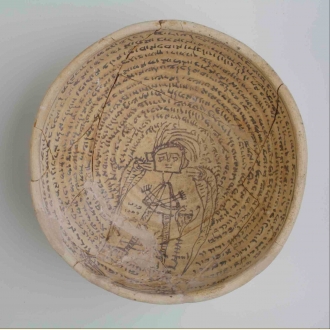
Not just your everyday cereal bowl. From the Bible Lands Museum's exhibit on Jewish Magic.

Eisenbruans has announced a new volume of editions of magic bowls. Aramaic Bowl Spells: Jewish Babylonian Aramaic Bowls Volume One will include bowls from the very important Schøyen Collection, and is being edited by Shaul Shaked, J.N. Ford, and Siam Bhayro. Shaked is one of the foremost authorities on the bowls, and his work has culminated in a slew of articlestwo volumes, and numerous lectures. I had the pleasure of hearing Ford give a talk at a conference that Shai organized last May in which he highlighted many Mesopotamian motifs that he found in the bowls. To top it off, Bhayro brings his expertise on the heterogeneity of pre-Islamic Mesopotamia and on magic texts from the genizah to the volume, which indeed promises to fill a very big gap in printed scholarship.

It goes without saying that the bowls are of utmost importance to the study of Talmud, and especially of the Bavli. Besides the linguistic importance, noted decades ago by Epstein and others, the bowls represent an important window on “the everyday beliefs and practices of the Jewish, Christian, Mandaean, Manichaean, Zoroastrian and Pagan communities on the eve of the Islamic conquests.” For some free content on the topic see here (profile from the Stanford Archaeological Center), here (an article by bowl expert Dan Levine), here (a summary by Shai of a lecture given by Shaked on rabbinic bowls), and here (another summary at the old Talmud blog, of a lecture by Bhayro on divorce motifs in the bowls).

Eisenbraun’s also announced the third edition of Emanuel Tov’s “Textual Criticism of the Hebrew Bible“. In its newest edition, the book, published originally in Hebrew as part of the “אנציקלופדיה מקראית”,

has incorporated the insights of the last ten years of scholarship, including new perspectives on the biblical texts among the Dead Sea Scrolls, all of which have now been published. Here are expanded discussions of the contribution of textual criticism to biblical exegesis and of the role of scribes in the transmission of the text. The introduction and references throughout the book have been thoroughly revised with the beginning student of textual criticism in mind.

Many of Prof. Tov’s articles, and even some of his books, are available on his personal website.

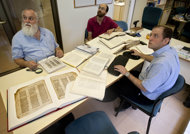
Members of the Hebrew University Bible Project at work. Note the Talmud scholar in the red shirt.

Although this may sound a little too biblical for readers interested mainly in the Talmud, textual criticism of the Hebrew Bible is an invaluable tool for understanding exegetical moves made by the rabbis. There are many instances in which midrashim were based on a text different than that which is before us today in most editions of the Tanakh. Additionally, scholars of rabbinic literature have a lot to bring to textual criticism of the Hebrew Bible, and the volumes of the Hebrew University Bible Project even have a dedicated apparatus of quotes from rabbinic literature.

Standard