English, Reviews

Protestant Mishnah

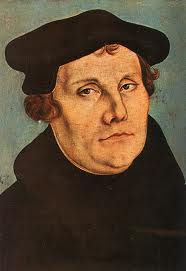
Lucas Cranach’s portrait of Martin Luther, 1529.

A serendipitous combination of circumstances brought Jonathan Z. Smith’s Drudgery Divine and Hanan Gafni’s Peshutah shel Mishnah to my shelf side by side. Gafni’s brand-new book, based on a dissertation written under the supervision of Jay Harris at Harvard, is written in beautiful and clear Hebrew and attempts to introduce the uninitated reader into the complex and fraught world of Mishnah scholarship in its infancy.

The Mishnah has two strands of textual tradition: the Babylonian and the Palestinian. Yaakov Zussman, through his command of the Mif’al Hamishna, claims  that there are no Mishnah  manuscripts that follow the tradition of the Bavli. This is no coincidence, per Zussman: the Babylonian tradition – of which all extant Jewish communities are heirs – did not prize the study of Mishnah on its own. The Mishnah was to be studied in conjunction with the Bavli. When Maimonides wanted to write a commentary on the Mishanh, he had to use a Palestinian Mishnah manuscript and sometimes update it to keep it in line with the Mishnah or the halakha of the Bavli.

The first edition of the Mishnah was printed in Naples, in 1502, with Maimonides’ commentary. Ovadia of Bertinoro published a commentary in Venice, in 1549. Study of the Mishnah on its own regained some ground in Kabbalistic circles in 16th century Safed – R. Joseph Karo’s supernatural Maggid was in fact the Mishnah personified.

But Gafni’s study begins in earnest somewhat later, scouring Kabbalistic works from the Lurianic school for oblique references to “Peshat and Derash” in the Mishnah. These references – that give his book its name – were the seedling that allowed Mishnah scholarship to begin in the school of the Vilna Gaon.

Gafni surveys scholars by geography, beginning with Safed, then Lithuania, Italy, Galicia, Germany and then, finally, Vienna. Scholars are selected, described and their work is discussed. Each chapter ends with an example, that is useful for understanding the real meaning of the figure’s work – often readers of such books end up knowing so little about the actual substance of the work. Many of the debates important to the interface between Jewish studies and Jewish people in our time are echoed in these sketches: should scholars be engaged in the issues of their communities? Should they bring their religious agendas to their work with them?

But for me – reading Smith at the same time – the striking point was the Protestantism of it all. The idea that these early Mishnah scholars had, that at some time in Jewish history there was a moment of purity, of clarity, when everything was pristine and not mangled up by the Talmud and its casuistry strikes a note that Smith hears elsewhere. Just as early study of religion was focused on highlighting the “uniqueness” of the one Religion – i.e. Apostolic Christianity, through a Protestant lens- so perhaps early study of Judaism by Jews was marked by their aversion to the Talmud (read: Bavli), its embarrassing complication, superstition, and stringency. The Bavli was the repository of choice for the shame Jews had of their own religion; as the protestants blamed the “rabbins” for the Jews and their strangeness, the Maskilim blamed the Bavli. Then, when they began to study the Mishnah as a work unto itself, this added another layer of embarrassment: really, the Bavli couldn’t understand the Mishnah at all!

The field in fact took over a century to recover. Only David Halivni and Eliezer Rosenthal, neither a “natural” heir to this tradition, both steeped in traditional talmudic study that they did not hate, were able to bring the Bavli back into the limelight. Numerous lessons were learned from this retreat from the Bavli, as well: first, that there are other texts besides the Bavli, and second, that the Talmud is neither stupid or superstitious. It is an interesting and complex product of its time and place – and that it is, on a most basic level – still not really understood.

Standard
English, Reviews

Sifre Bemidbar, Ed. Kahana!

In 1982, when he completed his doctoral dissertation, Menahem Kahana wrote:

In the first stages of preparing this dissertation, over a decade ago, I naïvely thought that I could quickly finish the menial work of collecting the material and collating it.

He ends his preface with a prayer

It is my hope and prayer that as I was able to complete these Prolegomena, I will, with God’s help, be able to publish the edition itself. (M. Kahana, “Akdamot le-hotsaa hadasha shel sifrei bemidbar”, PhD Diss., Jerusalem 1982)

Prof. Kahana recently fulfilled half of his prayer: his impressive edition and exhaustive commentary on the first half of Sifrei Numbers, the midrash on Numbers of the school of Rabbi Ishmael.

This is not the first critical edition of Sifre Numbers. The first attempt at a critical text and commentary was made by Meir “Ish-Shalom” Friedmann, of Vienna in 1864. This was not a critical edition in the sense that we use today: Friedmann just corrected the textus receptus of the Sifre according to Yalkut Shimoni, and added a commentary. The second attempt came shortly afterwards, in 1907, when Haym Saul Horowitz published Sifre Numbers (and Sifre Zutta Numbers) as the first volume in the series Corpus Tannaiticum: Pars Tertia, published by the Gesselschaft för die Wissenschaft Des Judentums in Berlin. (Prima and Secunda of the Corpus were the Mishna and Tosefta, which were never published; J. N. Epstein was commissioned to do the former but “only” managed to produce the Prolegomenon that he then translated into Hebrew). This edition had a real apparatus criticus and a short commentary, a real step up from Friedmann’s. Horowitz also almost completed the Mekhilta of Rabbi Ishmael and started work on Sifre Deuteronomy – both were published posthumously by Haym Rabin and Louis Finkelstein, respectively. The latter work was the last publication of the Gesselschaft, in October 1939.

Horowitz’s editions, however, suffer from three serious drawbacks. Their text is eclectic, based on ed. princ. (better than the textus receptus in Friedmann’s editions, but still not a good text), and it did not make use of all the manuscript material, which was not all known to Horowitz. Ed. Kahana, published a mere 104 years after ed. Horowitz, rectifies these problems: Kahana knows all the mss material – and has better knowledge than anyone of all the medieval citations and quotations of the Sifre as well – and strictly adheres to the best-text method of editing critical editions.

This method is not without its critiques – Peter Schäfer and Chaim Milikowsky both come to mind – but in the case of the Sifre it is probably the best one, because, as Kahana attempts to prove in his dissertation, all of the MSS of the Sifre represent a single text-type, unlike, say, Bavli Karetot or Moed Katan, or Hekhalot literature.

The commentary (for half the Sifre) spans two volumes. Kahana notes that he attempted to follow Saul Lieberman’s model in his exhausitve Tosefta Ki-feshuta, in that he tries to expand the discussion beyond the correct reading of the text, while paying close attention to these readings, believing that they hold the key to a correct understanding of any rabbinic text.

However, Kahana differs from Lieberman in two respects. The first is an outcome of the text Kahana chose, Sifre Numbers. Unlike Lieberman, who had two MSS and one ed. Princ. to work with, plus a smattering of Geniza fragments and citations in Medieval Authorities – and no medieval commentaries on his work at all, Kahana’s text has five whole MSS,  fragments, some from the Geniza (all discovered after the 1982 dissertation, and one, styled ב1 in the edition, discovered two summers ago by Ezra Schwat), two medieval commentators (R. Hillel b. Elyaqim  “from Greece”, the “Raavad”, in fact a Tosafist, and countless citations in later biblical commentaries on Numbers.  On top of that, the Sifre was emended more often and more freely than either Mishnah or Tosefta, often according to a parallel in the Bavli – other times according to other works. The production of a critical edition is thus more complicated, fraught, and methodologically nuanced for the Sifre than for Tosefta.

The second respect in which Kahana differs from Lieberman is his eye for matters of style, patterns, ring compositions and other such rhetorical devices. Kahana has published several papers on these devices in other works, and is happy to employ these tools when he can. This is but an indicator of the great generational shift in Talmudic studies, from a philological-historical approach to a philological-literary one.

Being half a work has some disadvantages. The three-volume set has no index, for example. This is probably going to be appended to volume 6 (or whatever the final volume turns out to be), but in the meantime, readers have no way of finding the amazingly useful surveys of terminology of the Sifre that dot almost every line of the commentary, or discussions of other midrashim and their manuscripts. Kahana did append the text of the entire Sifre to the edition, but without the apparati that are – in his own words – essential for understanding the text. Scholars, beware of citing the second half of ed. Kahana without reading through the manuscripts! Time will of course heal all wounds, and the remaining volumes of the text will have a complete edition and indices to everything. In the meantime, you can buy a searchable PDF edition of the work for a mere 300 NIS (150 if you already spent 200 NIS on the book!). The set also comes with Kahana’s Prolegomena which are actually still quite important and useful, and not found in most libraries outside of Israel.

Reviews will of course be published of this impressive (half a) work, but for the moment we can simply be content with a piece of advice cribbed from Kahana himself (about Lieberman’s TK). From now on, when you’re learning a rabbinic text, try to find a parallel in the first half of Sifre Numbers. Then at least you’ll  know what you don’t know.

Standard
English, Readings

A New Reading of 4Q251 8

Note: Events and reviews are the mainstay of the blog, but some original research and thoughts will of course be posted from time to time. The ideas in these posts are not finished pieces. Rather, they are ideas thrown out with the hope that they will generate comments and debate. This is a fragment I stumbled across while doing research for my MA thesis, supervised by Prof. Menahem Kahana. I thank Prof. Aharon Shemesh for the email conversation that sparked this post.

Several years ago, Aharon Shemesh (whose new book with Cana Werman was just published, and whose old books were recently reviewed by Beth Berkowitz) reread a Qumran fragment of what he termed “Midrash Mishpatim“. Designated simply and prosaically 4QHalachaa by its original editors, Shemesh was able to see through the holes in the fragment (and there were many) and posit an exciting new reconstruction of one pericope, a rewriting and commentary on Exodus 21:23.  His interpretation managed to make sense of the fragment while simultaneously reconstructing not only an interpretation of Exodus 21:23 (ונתן בפללים) heretofore unheard of, but also one that marks and explicates the exegetical element of the rewriting.

Speaking to Prof. Shemesh recently about the same fragment, I came across one other place where it is possible to offer a reconstruction along the same lines. Less exciting and revolutionary, but in this instance somewhat important, I believe, for the history of rabbinic legal history and biblical interpretation.

In the DJD reconstruction of the scroll, we read in fragment 8 (the asterisks mark letters that are not complete in the scroll, like the requisite circles above the letters in critical editions):

[כי יכה איש את עבדו או את שפחתו ]בעין [ או כי יפיל את שן]

[עבדו או אמתו לחפשי ישלחנ]*ו ונתן *ש*ב[תו ורפו]א ירפא

[תחת עינו או שנו כי יגח שור איש או ]*אשה והומת השור וסקלהו

As you can see, the words that remain in the fragment are בעין in l. 1, ונתן שב…א ירפא in l. 2 and אשה והומת השור וסקלהו in l. 3. The DJD editors decided that these words are the connection point between the midrash on Exodus 21:26-27 and idem, 28.

However, in a conversation with Prof. Shemesh, I suggested that בעין does not fit the role of the object of the blow quite well – one would expect את עינו as in MT or perhaps על עינו as in rabbinic Hebrew. בעין however is part of the talionic formula – not in Exodus, but in Deuteronomy 19:21, in the law of conspiring witnesses “עין בעין שן בשן יד ביד רגל ברגל”.

Beyond this “narrow” question of grammatical construct lies the wider question of the reliability of such reconstructions. The editors decided to read the fragment as commenting on the sequence Exodus 21:26-28, but this is but one option. The grammatical question can actually lead to the following reconstruction:

עין] בעין [ שן בשן  יד ביד

רגל ברגל כויה תחת כויה ] ונתן שב[תו ורפו]א ירפא

[כי יגח שור איש או ]*אשה והומת השור וסקלהו

This reconstruction (the DJD editors note that the first four reconstructed words in l. 3 don’t fit the estimated size of the fragment, and can be omitted) would have the fragment be the connection point between two laws that are not contiguous in the Biblical text: the law of the miscarrying woman, and the law of the goring ox. This reconstruction also lets the fragment answer an important question.

The formula “an eye for an eye” never appears as an integral part of a law in the Pentateuch, but rather has a way of being interpolated into an already existing law. As an exercise, try reading Exodus 21:22-25, Leviticus 24:16-22 and Deuteronomy 19:21 without this formula. The verses will stand on their own just fine.

4Q251 knows this, and might be creating a “new” law of assault in order to solve the problem (warning: unsubstantiated reconstruction!):

כי ינצו אנשים ונתתה עין] בעין [ שן בשן  יד ביד

רגל ברגל כויה בכויה ] ונתן שב[תו ורפו]א ירפא

[כי יגח שור איש או ]*אשה והומת השור וסקלהו

A more substantial reconstruction of line 1 might – perhaps read something like “when men fight together, and one hits the other and maims him, then you shall give eye for eye, tooth for tooth etc.”

In this new law, 4Q251 incorporates the talionic formula together with the law that compensation for lost time and medical expenses is given to the victim of a brawl (Exodus 21:19). This reading of Exodus 21:18-19 and 22-25 as parts of the same law is found in the Mekhilta according to Rabbi Ishmael (Nezikin 6 and 8 ) and the Mishnah (Bava Kama 8), and now – perhaps – also in 4Q251.

It should be noted that even if the DJD reconstruction is maintained, the inclusion of the formula from Exodus 21:19, ונתן שב…א ירפא means that Exodus 21:18-19 is read together with the other laws of injury, and not, for example, as part of the laws of murder. But I think the proposed reconstruction solves the grammatical problem and the legal problem in one swoop. It also does so more elegantly.

If so, this would be yet another example of possible connections between the school of R. Ishmael and other (almost contemporary) scripture-reading circles, such as Qumran.

Standard